
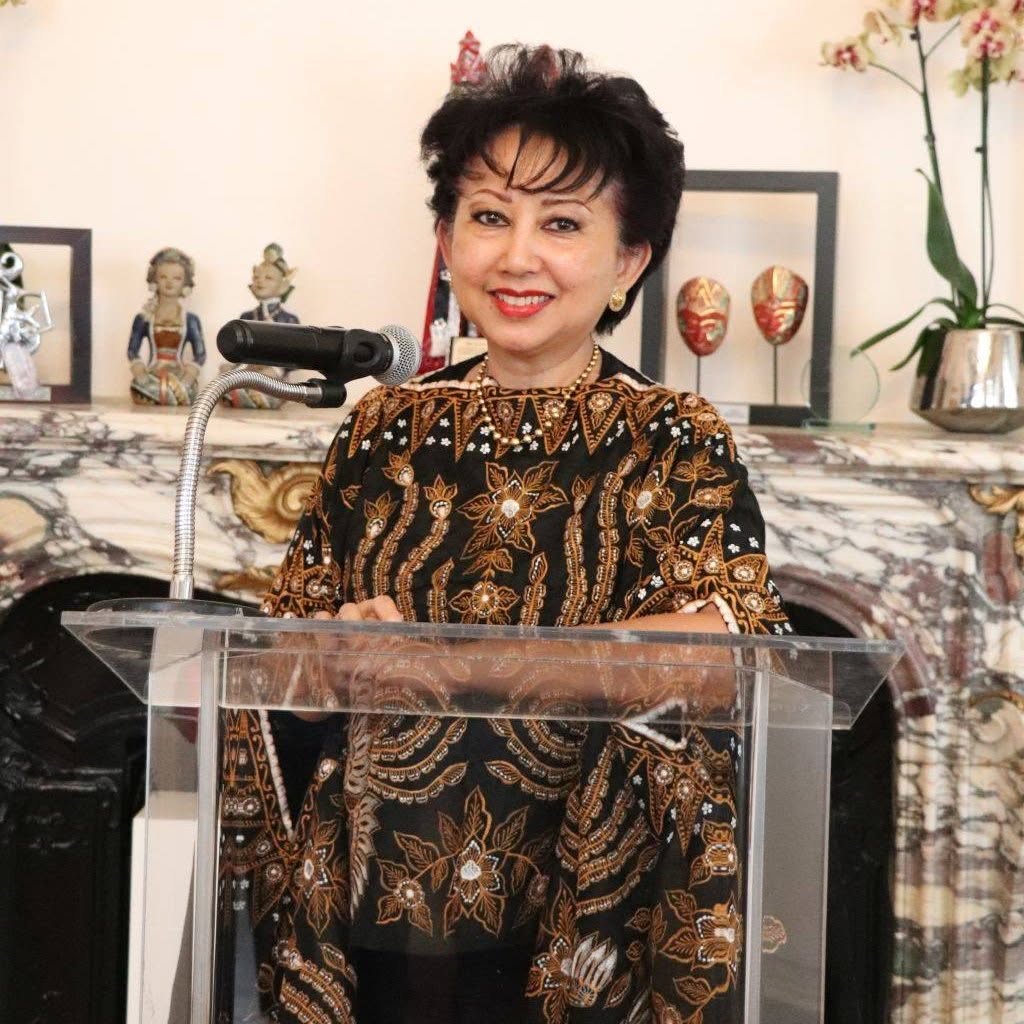
There is a woman from Pekalongan who once brought a legendary Hungarian singer to tears on stage, persuaded a man who would later be elected president of that country to stand as co-host at her embassy reception, and got thousands of high school students in small Hungarian towns — places no foreign official had ever visited before — to know Indonesia by name. Her name is Wening Esthyprobo Fatandari, and for nearly four years, from March 2015 to early 2019, she held one of the most distinguished posts in a diplomat's career: Ambassador of the Republic of Indonesia to Hungary.
Over the course of her posting, she returned home with ten official awards from various Hungarian institutions — a tally rarely matched by any diplomat elsewhere. But that number isn't really the most interesting part of her story. What keeps her name coming up today is a simpler question: how does a diplomat make a foreign nation genuinely fall in love, rather than merely offer polite, paper-thin respect?
Since her departure, the post of Indonesian Ambassador in Budapest has changed hands twice — first to Abdurachman Hudiono Dimas Wahab (2019–2025), then to Penny Dewi Herasati, who has served since March 2025. Yet the mark Wening left in Budapest — and in the hearts of many Hungarians — is still talked about today; her name continues to surface in media reports as one of the most memorable ambassadors ever posted there.
A Diplomat's Long Journey
Long before her name became synonymous with Hungary, Wening had already spent decades climbing the diplomatic ladder from the ground up. She attended secondary school at SMA Negeri 1 Semarang before going on to study English Literature at Diponegoro University, graduating in 1981. Her career at the Ministry of Foreign Affairs began in the mid-1980s — long before she could have imagined becoming an ambassador — and from there she moved from posting to posting: Vienna, New York, Brussels, and Oslo, each one shaping her with different experience, from multilateral economic affairs and ASEAN cooperation to diplomacy at the United Nations. In between, she also completed a master's degree in international relations at St. John's University in the United States in 1998.
That long string of experience eventually brought her to Budapest in March 2015 as head of Indonesia's diplomatic mission to Hungary. She presented her credentials directly to Hungary's then-president, János Áder, at Sándor Palace, Budapest, on 9 March 2015. Shortly before leaving for Budapest, Wening had been serving as Head of the Center for Policy Analysis and Development at the Foreign Ministry — a role that saw her interviewed by Chilean media in 2014 about ASEAN–Indonesia–Chile relations, proof that her diplomatic reach already spanned continents long before she became identified with Hungary.
For a woman who broke into the upper ranks of a world once dominated by men, Wening's career stands as proof that long dedication and consistency can overcome almost any limitation — a story worth inspiring Indonesia's younger generation of diplomats, women in particular.
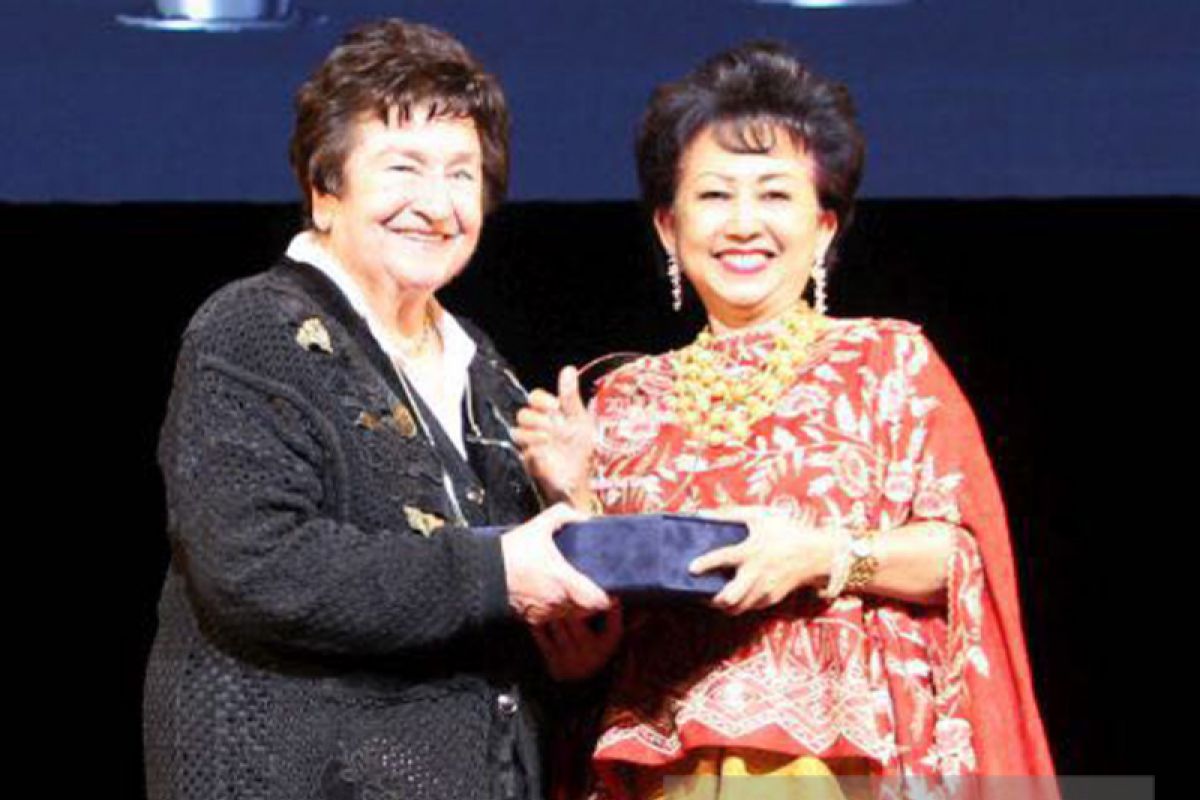
That award was just one of many acknowledgments that flowed in from across Hungarian society during her posting — from the arts, education, and cultural institutions alike — a sign of how far her network extended well beyond formal diplomacy. One habit at every such ceremony always moved her: before an award was handed over, the host would first read out the reasons behind it, so that each time she received a recognition, Wening found herself listening again to the whole trail of work that had led her and her team there.
Her openness and warmth even led to friendships that would later carry real weight. One was with Tamás Sulyok, who at the time was still President of the Constitutional Court of Hungary and agreed to co-host alongside Wening when the Embassy held its Diplomatic Reception — a man who would later be elected President of Hungary.
A similar connection brought her onto the program Tea with Gloria (Tea Glóriával), broadcast on Hatoscsatorna, or Hungary's Channel 6 TV. The interview, recorded at the Hatoscsatorna studio on 7 February 2017, was originally scheduled for just 45 minutes, but host Geszty Gloria's enthusiasm for Indonesia's cultural richness stretched the conversation to around 90 minutes — airtime that, priced as paid promotional slots, would have far exceeded any normal promotional budget. Wening appeared elegantly dressed in a traditional kebaya complete with a batik scarf and Indonesian accessories, in a studio decorated with an array of archipelago ornaments: batik cloth, wayang golek and wayang kulit puppets, a Balinese umbrella, a traditional wedding-couple statue, and the Red-and-White flag as the main backdrop. In the interview she promoted Indonesia comprehensively — covering politics, economics, and social and cultural life, as well as Indonesia–Hungary bilateral relations — while introducing the country's culinary richness with servings of wedang uwuh and Solo-style sausage alongside the conversation.
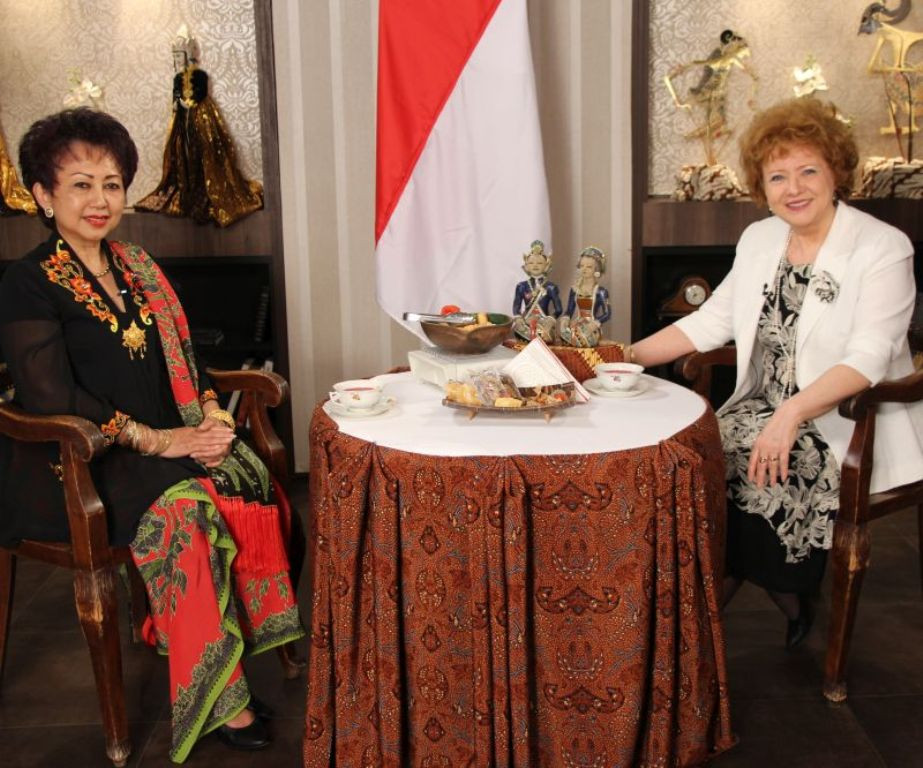
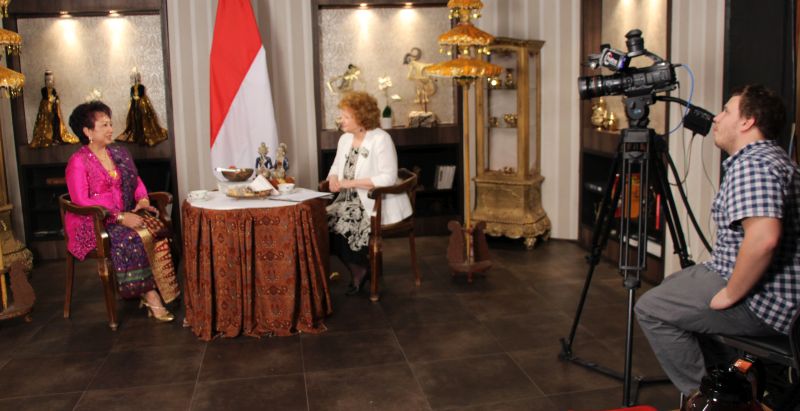
For Geszty Gloria, the interview felt special because it featured an ambassador who personally showed up to promote her own country on national television; she even called Wening a trailblazer, the first ambassador to appear on Tea with Gloria in the show's 15-year run — a talk program that had aired more than 500 episodes with prominent Hungarian figures and drawn over two million viewers. Through this blend of cultural diplomacy, fashion, and cuisine, Indonesia appeared on Hungarian screens as a nation rich in tradition, art, and diversity.
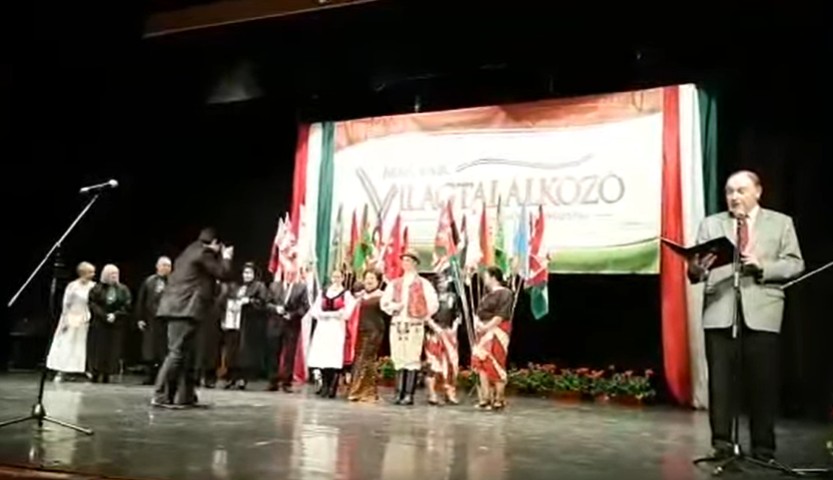
Perhaps the most personal recognition came on 16 May 2017, when, at the global-scale Magyar Világtalálkozó (World Meeting of Hungarians) forum, Wening was awarded the title of Honorary Member of Hungarian Society, or Tiszteletbeli Magyar — an acknowledgment of her dedication to bridging bilateral relations through culture, social work, and education that touched local communities directly. The forum also highlighted a range of cross-sector initiatives she had realized together with the Embassy in Budapest: in research and the environment, she facilitated a research partnership between Lake Toba — the world's largest volcanic lake — and Hungary's Lake Balaton, while also helping mediate the shipment of native Indonesian animals to the Budapest Zoo, in addition to supporting the Nyíregyháza Zoo; on the social side, she regularly provided support and donations to orphanages, elderly care homes, and disability institutions across Hungary, and revived the annual Sumatra Badminton Cup tournament in Budapest to nurture young local badminton talent. Her affection for local culture also showed in the outfit she chose for the award ceremony — pairing an Indonesian kebaya with a párta, the traditional headdress of Hungarian women, as a gesture of respect for the history and culture of the country she called home.
The Scent of the Archipelago in Sopron: Where Diplomacy Meets Gastronomy
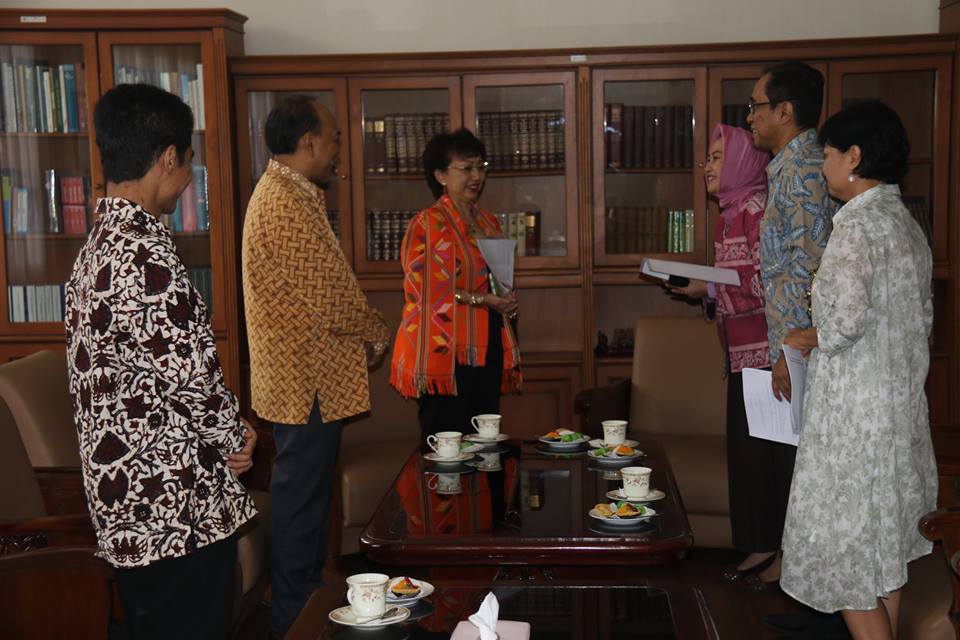
Barely a year into her posting, Wening was already showing her signature style of diplomacy: going straight to the regions, not just staying in the capital. On 31 March 2016, she visited a vocational tourism school in the city of Sopron — a historic town near Hungary's western border — bringing with her a mission to introduce Indonesia's cultural richness through the palates of its students.
In a warm visit, Wening greeted the students and teachers there in person. She chose Sopron as the starting point of her regional visit program, given the school's strong reputation in tourism and culinary arts. “I'm happy to be here,” she told the students and staff who welcomed her. With evident pride, she introduced a small sample of Indonesia's thousands of recipes — the world's largest archipelagic nation — to students studying culinary arts.
For the students, the visit felt special. Around a hundred of them took part directly in a cooking demonstration and tasting session, with the Indonesian dishes adapted to ingredients available in Hungary — a small adjustment that let Nusantara recipes still come across authentically even far from home. Beyond taste, they were also invited to experience a bit of cultural harmony through performances of traditional Indonesian music and dance that accompanied the visit.
The warmth of the Sopron visit is a reminder that behind an ambassador's formal title lies a genuine wish to bridge two very different cultures through the most universal medium of all: food and hospitality. The sight of students eagerly trying exotic recipes from a tropical nation in the middle of a historic European city stands as one of the earliest examples of Wening's style of diplomacy — going straight to the ground, reaching the grassroots, and speaking through the most human of things — well before she formalized similar programs such as “Indonesia Goes to School” in the years that followed.
Mother of the “Ambassador of Indonesian Reggae”
Behind the poised diplomat is also a mother. Her only son is Muhamad Egar, better known on stage as Ras Muhamad — an Indonesian reggae musician nicknamed by his community as the “Ambassador of Indonesian Reggae,” once named Best Reggae Act by Rolling Stone Indonesia. Interestingly, mother and son took almost opposite paths: she spent her life amid protocol and the diplomatic table, while he chose the stage and the microphone. Yet the two often found themselves crossing paths anyway — as Ras Muhamad performed in Budapest, Bratislava (Slovakia), Summer Fest (Germany), Ostróda (Poland), Oslo (Norway), and even the Sierra Nevada World Music Festival in San Francisco (United States) — some of those stages well outside his mother's diplomatic jurisdiction, yet still bringing the two of them together.
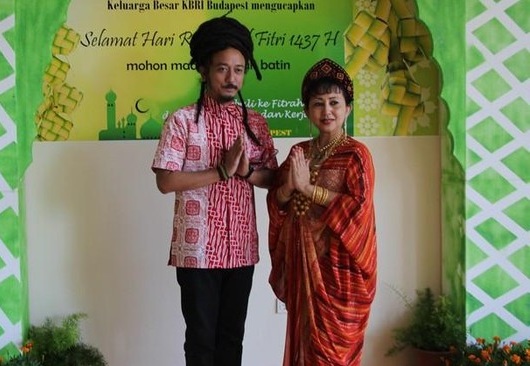
At Eid al-Fitr in 2016 in Budapest, Ras Muhamad even flew in specially to gather with his mother and the Indonesian community there. And at one concert in Central Europe, he once dedicated a song to his mother in front of the audience — a moment that, according to those close to the family, moved the ambassador to tears among the crowd. Wening herself is known to fully support her son's choices in life, even though they diverge sharply from the bureaucratic path she took.
Because he's happy doing it. Let him choose, as long as it's positive.Wening Esthyprobo Fatandari, on her son's life choices
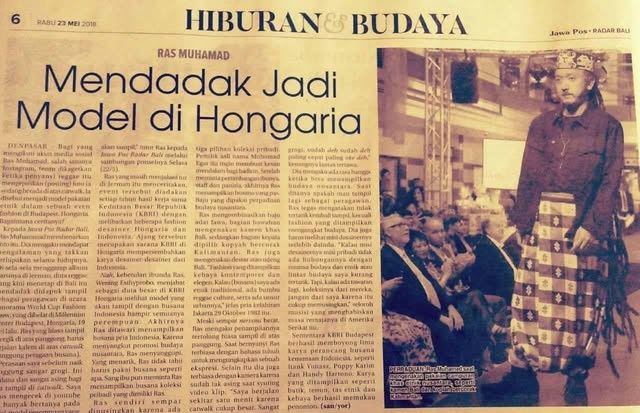
One of the most unexpected moments born of this mother-son closeness came on 19 May 2018, when Ras Muhamad was suddenly asked to walk as a model in the Panorama World Club Fashion Show at Millennium Center, Budapest — an annual event held in cooperation between the Embassy and Hungarian and Indonesian fashion designers to showcase homegrown designers' work. Wening, noticing that nearly all the models set to wear Indonesian outfits were women, invited her son to model the men's pieces. Though admittedly nervous, having never walked a catwalk before — to the point of watching YouTube tutorials and asking the female models around him for tips — Ras ultimately agreed, since it was for the cause of promoting Indonesian culture. He appeared in a mix of traditional Javanese attire, a Balinese kamen, a Kalimantan-patterned kopyah cap, and a Balinese udeng headcloth, put together through discussion with his mother and the organizers, drawn from his own personal collection. That year's show also featured the work of six Indonesian fashion designers, including Itang Yunasz, Poppy Karim, Handy Hartono, Batik Chic, Khanaan, and Warna Tasku, presenting batik, woven textiles, ethnic bags, and kebaya that captivated the audience.
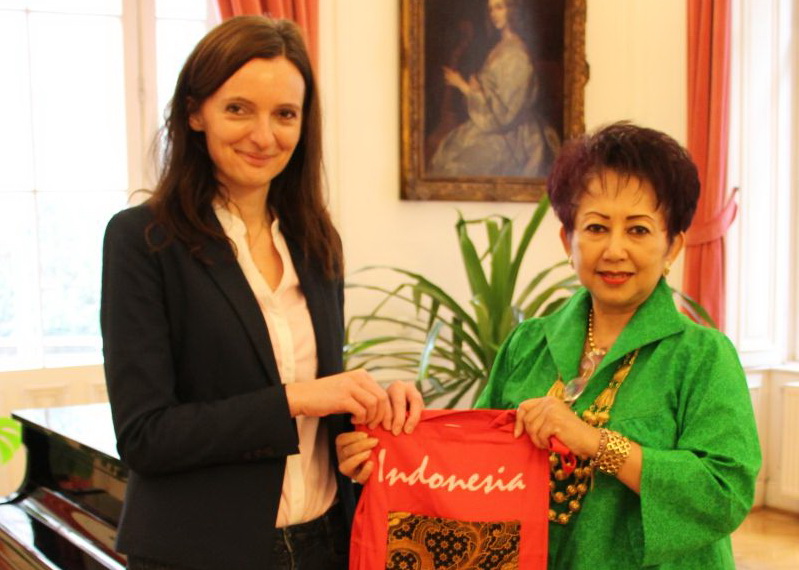
That closeness even grew into a tangible act of cultural diplomacy. Wening once donated a collection of Indonesian music albums — including Ras Muhamad's work — to the Szabó Ervin Metropolitan Library in Budapest, one of Hungary's largest libraries, in an effort to introduce Indonesian music and cultural heritage to the Hungarian public more broadly.
When Diplomacy Speaks Through a Children's Book
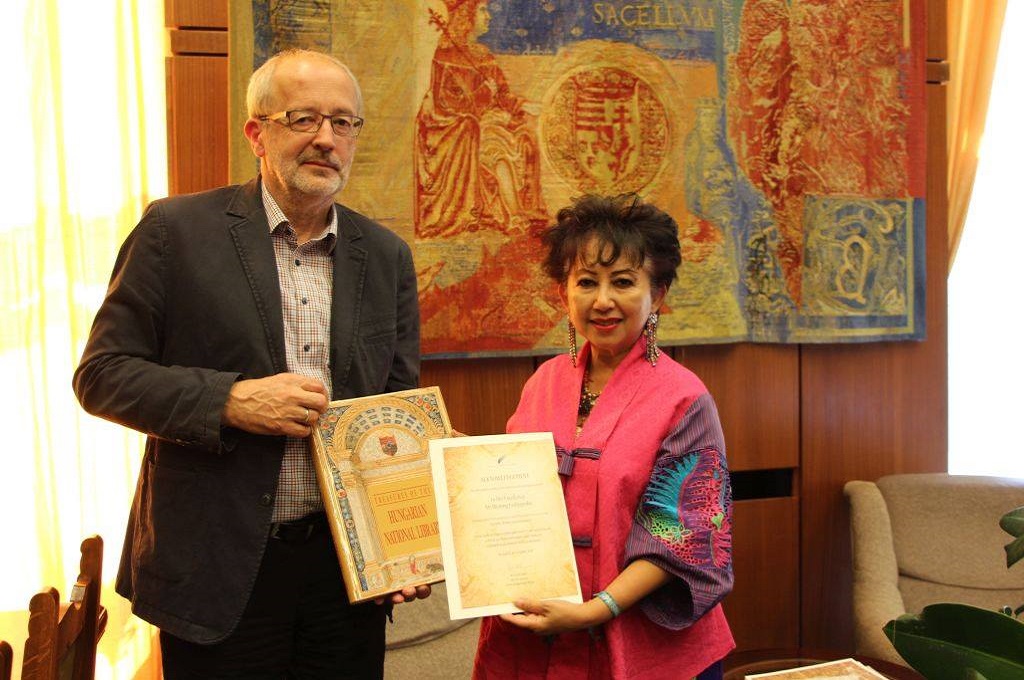
During her posting in Budapest, Wening didn't just keep busy with formal state agendas. She also cultivated closeness through far more personal work — and one of the most memorable was her initiative to translate and edit a children's book by Hungarian author Erika Bartos, Hoppla Meséi, Kirándulás Pécs Városába (known in Indonesian as Kisah Lonci, Petualangan ke Kota Pécs, or "Lonci's Story: An Adventure to Pécs") — translated by Embassy staff member András Terfy, with the grammar edited directly by Wening herself. This small step had an outsized impact: the City of Pécs gave her a special award for her role in introducing the city to Indonesian children through story, while on 10 October 2018, the National Széchényi Library gave her a similar honor, presented directly by its Director General Dr. László Tüske, for her initiative translating Hungarian children's stories into Indonesian.
I go out into the countryside. So it doesn't stop at the big cities alone.Wening Esthyprobo Fatandari
For Wening, diplomacy was never only about the negotiating table. She believed literature and culture were a universal language, far more effective at closing the distance between nations than any official document. That belief also drove her to launch the “Indonesia Goes to School” (IGTS) program — an initiative introducing Indonesian art, culture, and cuisine directly to high school students across Hungary, not just in Budapest but reaching small towns rarely visited by foreign officials, in keeping with her belief that young people are the generation who will carry the relationship between the two countries forward.
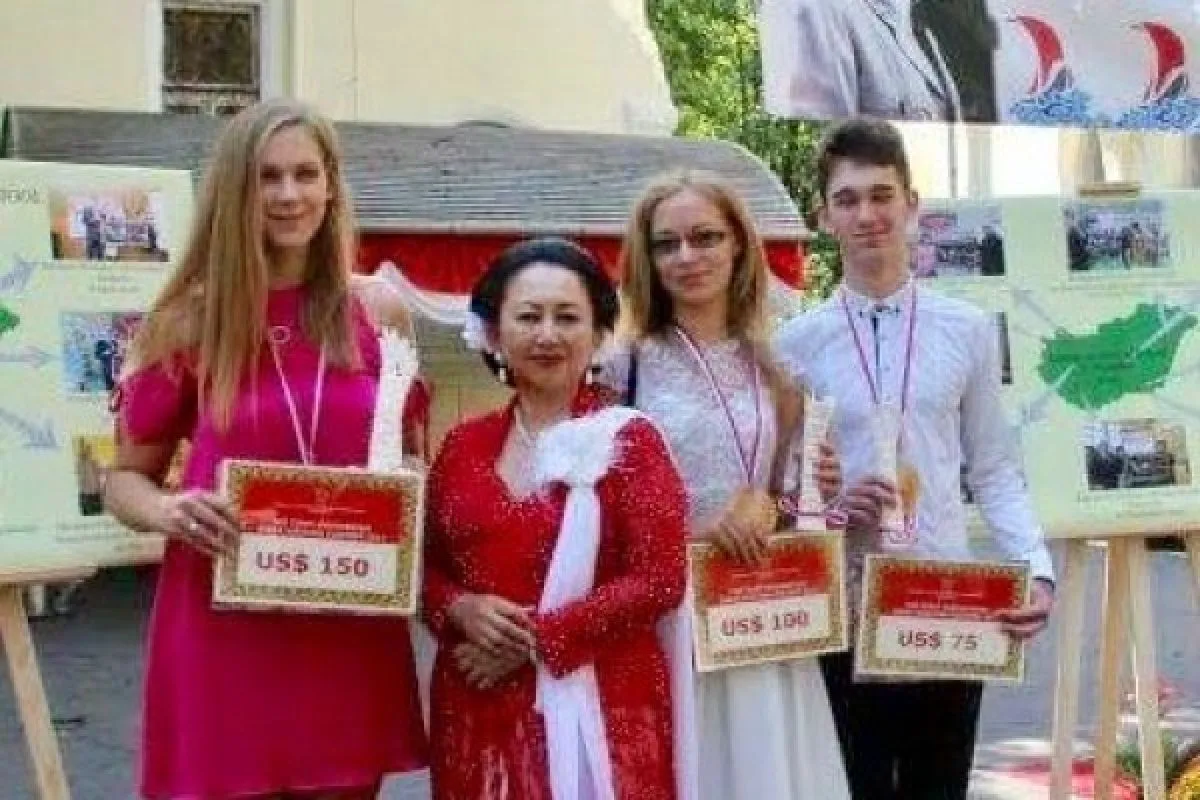
The IGTS program later grew into an essay-writing competition themed “Indonesia, Unity in Diversity” for Hungarian students, first held by the Embassy in Budapest to mark the 72nd anniversary of Indonesian independence in 2017. Essays were collected from April to June 2017 from 15 high schools previously visited by the IGTS team, and the competition was won by three students from schools in Szeged and Szolnok — Matuszka Nikolett, Vivien Mihály, and Kovács Dávid. Wening said the competition was meant to spark Hungarian students' curiosity about Indonesia. The winners received trophies and prizes at the 72nd Independence Day commemoration itself — an event that also served as the occasion to present certificates of appreciation to a number of Hungarian “Friends of Indonesia” recognized for promoting Indonesian culture, among them Szigetvári József, Director of the Summerfest Százhalombatta, who invites Indonesian arts groups to perform at his festival every year; Viszt Viktor, Stage Director of the Babel Sound Festival; and the management of the Rondella Gallery, which provided exhibition space for a photo exhibition by Mario Blanco in the town of Esztergom.
The peak of the 72nd Indonesian Independence Day commemoration was held as a diplomatic reception at the historic Pesti Vigadó building in Budapest on 7 September 2017, attended by diplomats, Hungarian government representatives, and international partners. Indonesia's charm was on full display through traditional dance performances representing the archipelago's ethnic diversity, a fashion show blending Indonesian textiles with modern touches, and musical performances that brought a spirit of togetherness to all present. On that occasion, Wening emphasized that the celebration was not merely a state ceremony but a tangible expression of Indonesia's commitment to strengthening both cultural diplomacy and economic cooperation with Hungary.
Her drive to widen access to education also showed when she officially opened an Indonesian-language class at the Budapest Business School in February 2017 — a class that drew dozens of interested Hungarian students and became part of the two countries' strengthened educational cooperation.
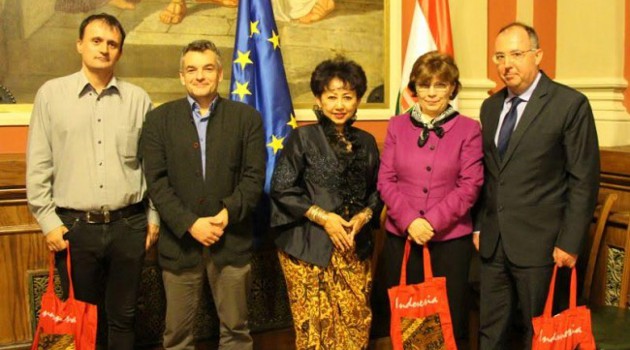
That persistence paid off. Over the course of her posting, Wening received a full ten awards from various Hungarian institutions in recognition of her contribution to strengthening ties between the two nations. Three of them came in quick succession within a two-day span in October 2018: on 9 October, the Hungarian Museum of Natural History (HNMH) honored her for the productive cooperation between the Embassy and HNMH, particularly in the exchange of information about native Indonesian fauna; the following day, 10 October, she received a courtesy visit from the Director of the Nyíregyháza Zoo (Sóstó Zoo), Gajdos László, along with his expert staff member Dr. Papp Endre, who praised her efforts strengthening cooperation between Jakarta's Ragunan Zoo and Sóstó Zoo; and on that same day, the National Széchényi Library awarded her for her initiative translating Hungarian children's stories into Indonesian — rounding out a run of honors she received from a city government, a natural history museum, a zoo, an educational institution, and Hungary's national sports committee.
One of her most prestigious honors came on 12 November 2017, when Wening formally received the Panorama World Club Award in Budapest, the event's highest form of recognition for her dedication and tangible contribution to strengthening bilateral relations and strategic cooperation between Indonesia and Hungary. At the ceremony, organizers specifically highlighted three of her key achievements: her active role in facilitating academic cooperation and knowledge exchange between educational institutions of the two countries; her efforts to drive research and innovation collaboration that brought real benefits to communities in both Indonesia and Hungary; and her concern for social and environmental issues, including tangible support for the development of the Nyíregyháza Zoo. For many, the award became a symbol of the success of Wening's humanistic, collaborative approach to promoting Indonesia's positive image in Central Europe.
Tending the Relationship from the Grassroots
Under her leadership, ties between Indonesia and Hungary grew closer and warmer, not just at the government level but among the two peoples themselves. Wening regularly facilitated visits by senior officials from both countries, while also keeping community activities alive — from Indonesian art and cultural performances held multiple times a year, to collaborative art exhibitions with local Hungarian artists, to friendly sports events with fellow embassies in Budapest. The annual Eid al-Fitr celebration at the ambassador's residence became a yearly moment she always opened with a simple message: preserving unity and presenting Indonesia's identity as a polite, welcoming nation, amid a growing Indonesian community in Hungary dominated by students and professionals pursuing education and careers in Central Europe.
On the trade-promotion front, the annual Indonesian Days, always held to mark the start of spring around May, became an eagerly anticipated event for Budapest residents on the Embassy grounds. Over two days, visitors were treated not just to a range of Indonesian handicrafts but also to music and dance, while sampling satay, fried rice, fried noodles, and snacks like kue pukis and sweet martabak topped with cheese and drizzled with chocolate milk — flavor combinations quite unusual to the Hungarian palate. After two days at the Embassy grounds, the same stalls would then continue for three more days at Budapest's Great Market Hall, before the Indonesian small-business exhibitors continued their trade mission to the Tong Tong Fair in the Netherlands.
As a woman ambassador, Wening also consistently practiced fashion diplomacy, wearing both traditional and modern Indonesian attire on various occasions. Her sense of style even led to her being appointed Chair of the Jury Board for a Hungarian beauty pageant, while her network among local designers secured free venues and models for staging Indonesian fashion shows in Hungary. To win over local hearts even further, she invited a Hungarian folk-dance instructor to train the Embassy's dance troupe — the result being that the Embassy's Indonesian folk dance troupe, coached under her tenure, went on to perform several times at farewell events for departing ambassadors of friendly nations in Budapest.
One of the most memorable moments occurred on 14 August 2018, when Wening took part in a fashion segment held as part of the Magyar Világtalálkozó Szépe beauty competition in Budapest. She chose to wear classic Indonesian batik paired with modern touches, and her appearance was warmly received by an audience captivated by the exotic batik motifs. For Wening, moments like these were a tangible expression of her commitment to promoting Indonesia's creative industry and traditional textiles — while opening the door to broader appreciation for Indonesia's flagship products in the Central European market.
Her support for the work of the Indonesian diaspora in Hungary was equally real. She helped accompany the launch of the book Exploring Hungary by Indonesian diaspora author Gaganawati Stegmann at the Embassy in Budapest — a work that even carries a foreword written directly by Wening herself, a mark of her closeness with the community of Indonesians actively building careers abroad.
Batik, Kebaya, and a Philosophy of Life
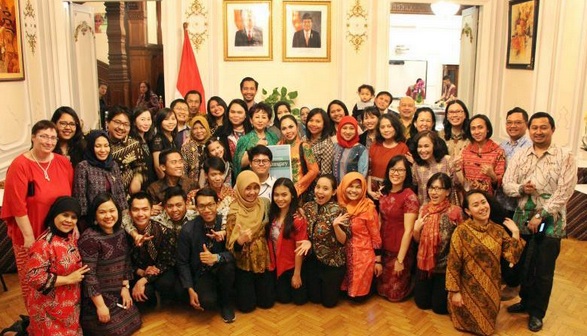
One thing that always stayed with Wening was her love of national dress. On many official occasions on the international stage, she deliberately wore batik or kebaya — not merely as a style choice, but as an approach she herself called fashion diplomacy: a way of introducing Indonesia's richness through the most personal thing of all, what a person chooses to wear.
She was also known for holding firmly to one conviction: Indonesian women should never limit themselves in whatever field they choose to pursue. Her message to the younger generation was simple but full of meaning — chase your dreams as high as you can, and never let anything stand in the way.
Even as her posting drew to a close, her spirit for cultural diplomacy never faded. On 26 February 2019, Wening still made time to attend and personally watch a traditional dance performance at a warm cultural-exchange event in Budapest — her presence a symbol of her full support for efforts at mutual understanding between the citizens of both nations. For her, cultural diplomacy was the strongest foundation for keeping the friendship between Indonesia and Hungary close, harmonious, and sustainable, long after her tenure in Budapest came to an end.
Still Active After Retirement
Leaving Budapest didn't mean Wening stopped contributing. As an alumna of the 1986 cohort of the Indonesia–Japan youth friendship program (the Nakasone Programme), she now sits on the Supervisory Board of KAPPIJA21 (the 21st Century Indonesia–Japan Friendship Program Alumni Family) — an alumni organization overseeing more than 4,100 members of the Indonesia–Japan exchange program across Indonesia. Through this role, Wening still frequently represents Indonesia at international cooperation forums, including regional meetings of young ASEAN–Japan leaders, while continuing to pass on her long experience as a diplomat to a younger generation.
A Voice from Budapest on the Podcast: Wening's Reflections on Hungary
It turns out Wening's story in Hungary is not yet finished being told. Recently, she appeared as a guest on the Newlitics talk show, aired on the Helmy Yahya Bicara YouTube channel, revisiting her nearly four years serving in Budapest — this time not through ceremonial protocol, but through a relaxed, story-filled conversation. Here is the full episode.
In the conversation, Wening opens up about a rarely told chapter: how she "stumbled" into the world of diplomacy almost by accident. The youngest of four siblings and the daughter of a civil servant working in the plantation sector, she admits she sat the Foreign Ministry's entrance exam in Jakarta with almost no real plan — simply tagging along with a small group heading there at the invitation of a university rector's daughter from Diponegoro University, right after finishing her English Literature studies in Semarang. A simple tip from an exam supervisor, suggesting she list the Diplomatic and Consular Officer track code on her paperwork, turned out to be the turning point that carried her through postings in Vienna, Austria, New York, and Norway, before she was finally entrusted with leading the Embassy in Budapest.
She then linked her experience in Hungary to a broader idea about tourism as an instrument of diplomacy. Budapest, often nicknamed "the Paris of Eastern Europe," is split by the Danube River and sits atop roughly a hundred natural hot springs, but for Wening what matters more is how a country of around ten million people treats tourism not as an afterthought but as an engine of foreign exchange and a way of cultivating "Indonesianists" — her own term for foreigners who fall in love with Indonesia. She pointed to how Thailand turns its small restaurants abroad into culinary ambassadors, and how Hungary, despite having no coastline at all, still manages to excel on the world sporting stage and build a strong name in medical education, all while sustaining an education and healthcare system that is largely free or heavily subsidized by the state.
But the part that most defines her style of diplomacy is her emphasis on the personal approach, or what she calls a human-to-human relationship. She describes routinely going out to visit secondary schools across Hungary, bringing along Darmasiswa scholarship alumni skilled in playing Javanese and Balinese gamelan, along with screenings of short films and interactive quizzes about Indonesia. She even learned traditional Hungarian dances herself in order to connect with local officials and communities — a principle she sums up in her own words: a diplomat can only truly serve their country's interests after first winning the hearts of the people they meet.
Toward the close of the conversation, Wening also raised a number of areas where she believes Indonesia has much to learn from Hungary — from water management and water-treatment technology to more affordable education and healthcare access for the wider public. She frames these critical notes not as complaints, but as reflections from a diplomat who has seen firsthand how a small nation can make the most of every resource it has.
The conversation on the Newlitics and Helmy Yahya Bicara channels rounds out the story of Wening, which until now has largely been captured through official Embassy statements and Hungarian media coverage. Through this more personal, reflective conversation, the Indonesian public gets a fresh vantage point: that behind all the protocol and the awards she received lies a consistent life philosophy — that true diplomacy begins with a willingness to go to the grassroots and weave connections across nations through the most human things.
Wening Esthyprobo Fatandari has shown that with long-standing persistence, integrity, and a touch of creativity, a diplomat can leave behind a legacy that reaches far beyond state documents — a legacy embedded in the collective memory of two nations, one she continues to tend even long after her service in Budapest came to an end.