
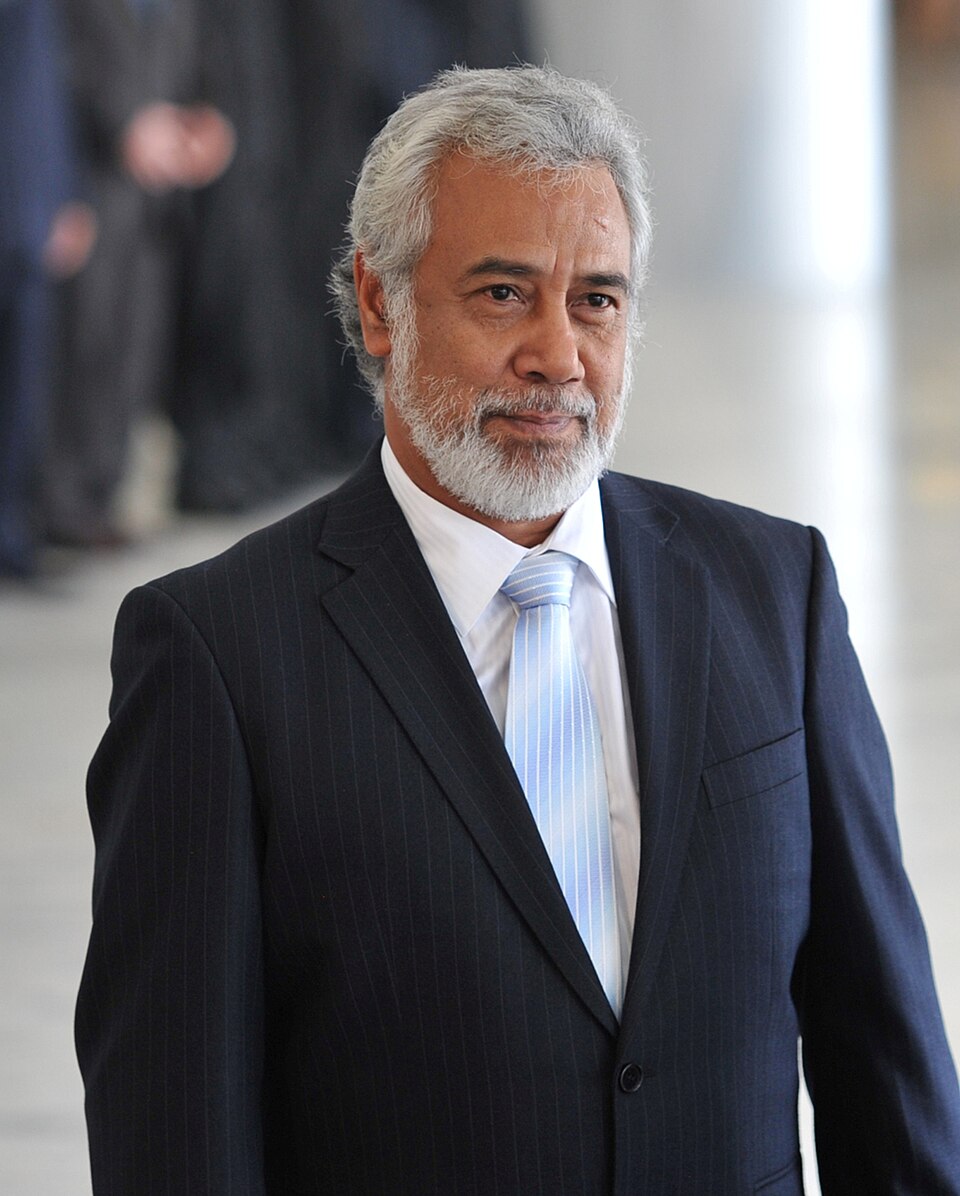
Xanana Gusmão: From the Dark Forests of Matebian to the Halls of Power
The story of a fighter who became a founding father
Some people are born to live ordinary lives. And some are destined to carry the weight of history on their shoulders, even if they never asked for it. Xanana Gusmão is the latter — the son of a teacher from a small village called Manatuto, who would go on to become a name spoken with reverence in the halls of the United Nations, in guerrilla forests, and in dark prison cells.
Today, at the age of 80, José Alexandre "Xanana" Gusmão still stands tall as Prime Minister of the Democratic Republic of Timor-Leste — a nation born, in no small part, from his own blood, sweat, and unwavering resolve.
The Boy from Manatuto Who Chose a Quiet Path
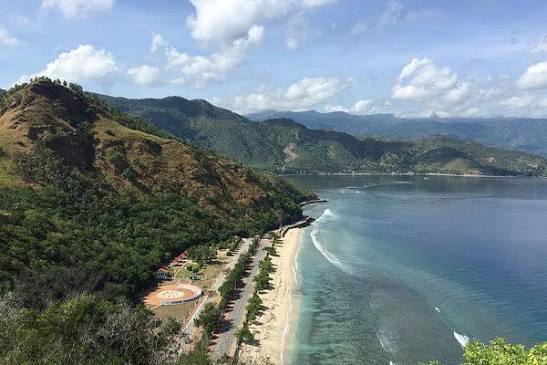
He was born on 20 June 1946 in Laleia, Manatuto, a coastal region in Portuguese Timor, the second son of a large family of mixed Portuguese-Timorese descent. Both his parents were schoolteachers. Gusmão attended a Jesuit secondary school outside Dili, but was forced to leave school at 15 due to financial hardship, later continuing his education through night classes while working a series of manual jobs. He served three years in the Portuguese colonial army before shifting course to become a civil servant, surveyor, and teacher — occupations that seem far removed from the image of a guerrilla leader who would one day shake Jakarta to its core.
There's a small anecdote few people know: the nickname "Xanana," which would become so iconic, was actually borrowed from the American rock and roll group Sha Na Na — the pronunciation happened to match perfectly in both Portuguese and Tetum spelling, inspired by a line from the old doo-wop song "Get a Job." A lighthearted stage name, far removed from the historical weight it would eventually carry.
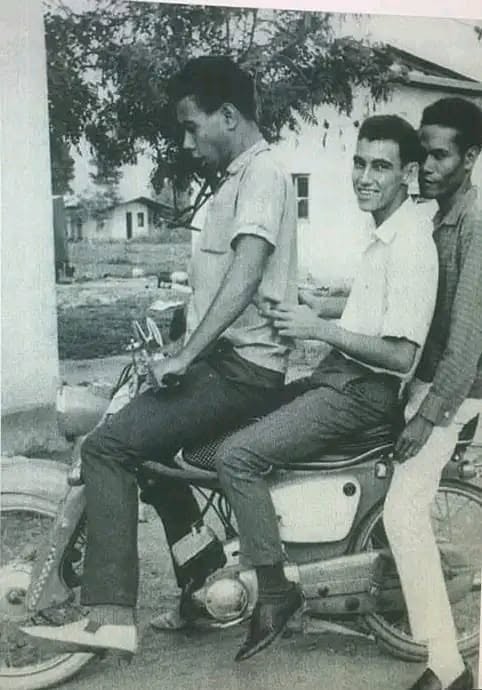
Before the world came to know him as a guerrilla leader, his peers knew him as a devoted football fan — like most young men in Portuguese Timor at the time. He was most skilled standing under the crossbar as a goalkeeper, but was also known for his sharp reading of the game, both in attack and defense — a talent for reading situations that would perhaps later evolve into his tactical instincts on the guerrilla battlefield. He had actually hoped to continue his higher education in Portugal, but coming from a large family with many siblings, he chose a more practical path: working as a daily newspaper journalist. It was in journalism that his talent truly shone — he was known for his skillful writing, and even won a Portuguese-language poetry competition.
But his sharp pen also carried risks. While East Timor was still a Portuguese overseas province, his writings frequently criticized colonial government policies he considered insufficiently representative of the people's voice — to the point that the local government filed a civil lawsuit against the newspaper company that published his work. Behind that seriousness, he was also known as someone who loved to joke around, a prankster who made his friends burst into laughter with him — a warm side rarely seen in the man who would become the region's most feared symbol of resistance.
But history has its own way of calling certain people to a stage far larger than themselves.
When the Forest Became Home, and Resistance Became Breath
In the early 1970s, as the central government in Lisbon began opening space for its overseas provinces to determine their own futures, Portuguese Timor was granted a similar opportunity. Among the parties that emerged, Xanana was drawn to ASDT — which would later transform into Fretilin — because of its firm vision calling for absolute independence and full nationhood, rather than a half-hearted autonomy.
The year 1975 became a turning point that changed everything. When a coup in Portugal triggered the decolonization process in Portuguese Timor, internal strife between local factions erupted first — and the young Xanana, then leaning toward Fretilin, was captured and imprisoned by a rival faction. He was only released after Fretilin managed to regain control, and was given the role of the organization's Press Secretary — he was even the one who recorded the moment of the "Democratic Republic of East Timor" independence proclamation on 28 November 1975. Nine days later, from the hills outside Dili, he watched with his own eyes as Indonesian troops began pouring in through Operation Seroja — and for days afterward, he ran from village to village searching for his family.
That large-scale, long-running operation claimed the lives of many Fretilin intellectuals and Falintil commanders alike, including the great leader Nicolau Lobato — a blow that nearly broke the spirit of Timor-Leste's independence struggle. Yet from that devastation, in the early 1980s, emerged the figure of José Alexandre Gusmão as Supreme Commander of the resistance under the wartime code name Kay Rala Xanana Gusmão — leading with a more persuasive and measured approach, far from reckless.
From then on he threw himself fully into the resistance movement, walking from village to village to build support and recruit new fighters — quiet, painstaking work that would become the foundation of one of Southeast Asia's most resilient resistance organizations.
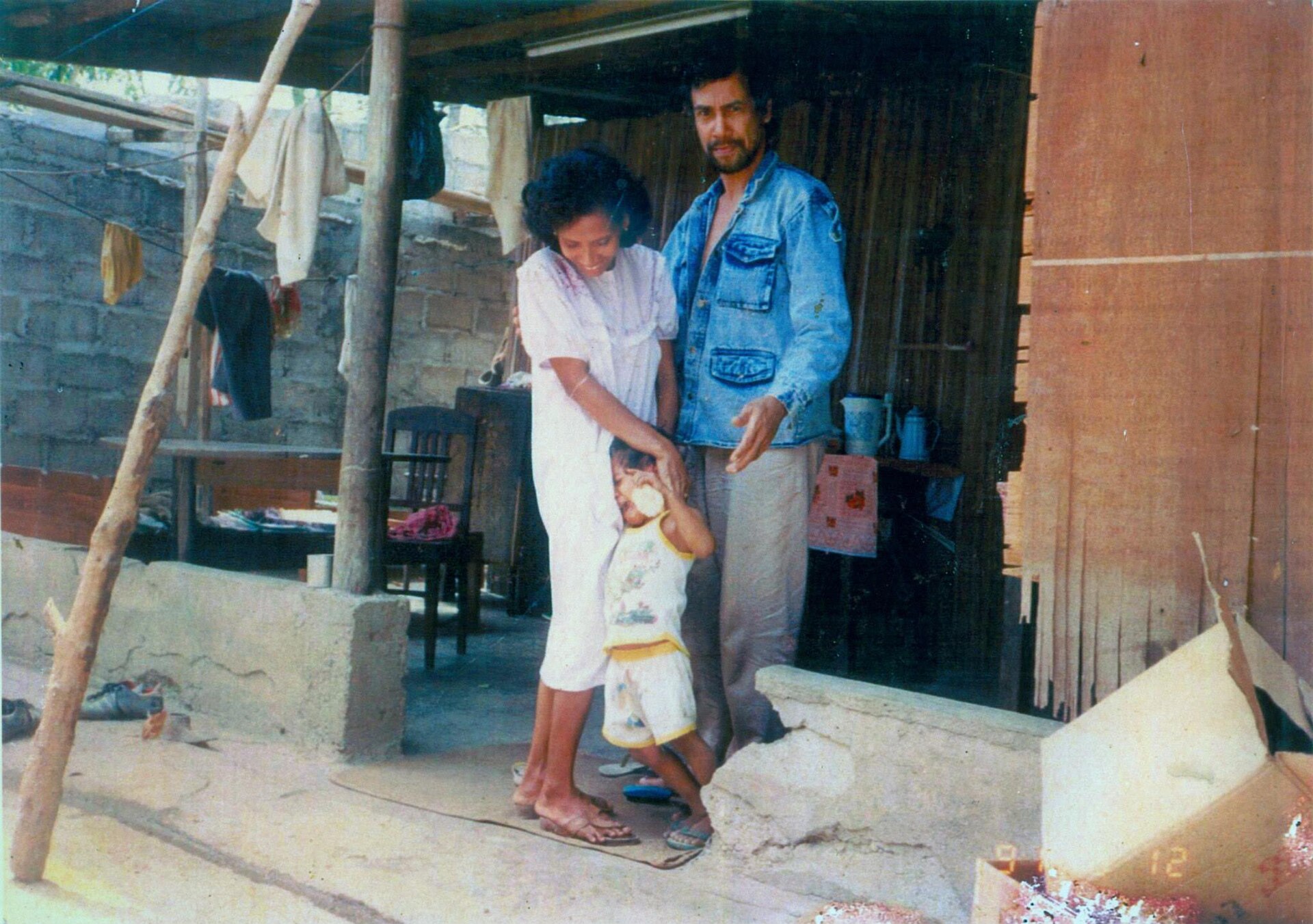
When Fretilin leader and central resistance figure Nicolau dos Reis Lobato was killed, a secret conference in Lacluta in March 1981 selected Xanana as the new leader of Falintil — the armed wing of the East Timorese people. A year later, in March 1983, he even led ceasefire negotiations with the Indonesian side — a brief pause amid a long conflict, made possible in part by an unexpected intermediary: Father Locatelli, who bridged a meeting between Xanana and several Indonesian officials at Camp Gattot, Bibileu, Viqueque, alongside local figure Bere Malai Laka.
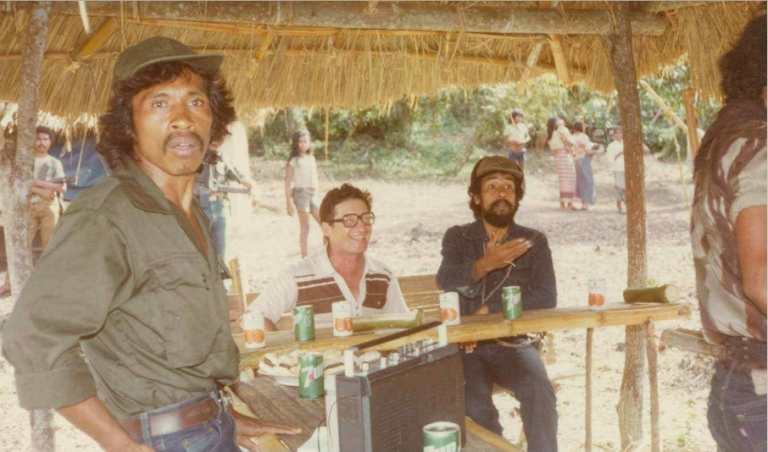
From that bridge came the first meeting with the Indonesian Military Commander in East Timor, Colonel Purwanto, on 20 March 1983.
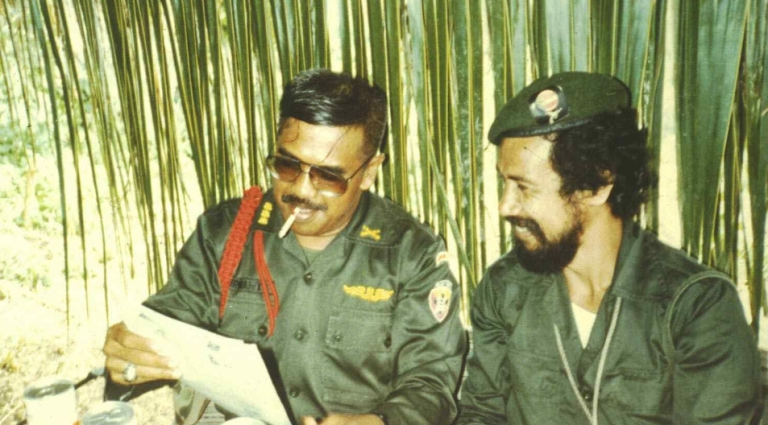
From that negotiation came a larger ceasefire ceremony, when Governor Mário Carrascalão received a military salute from Falintil forces led by Xanana at Lariguto, Ossu, Viqueque.
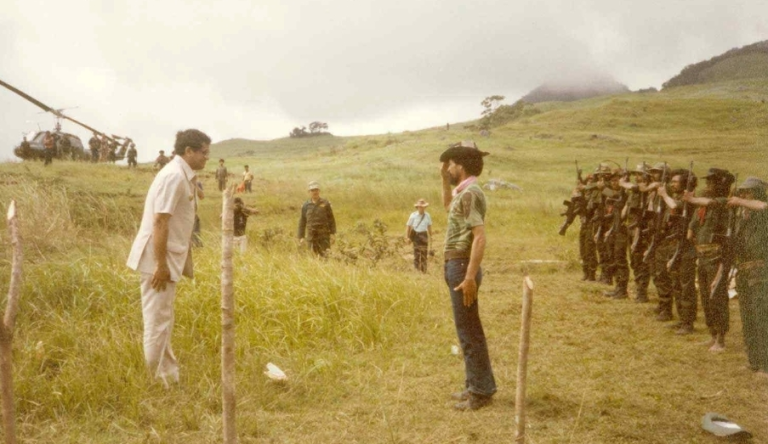
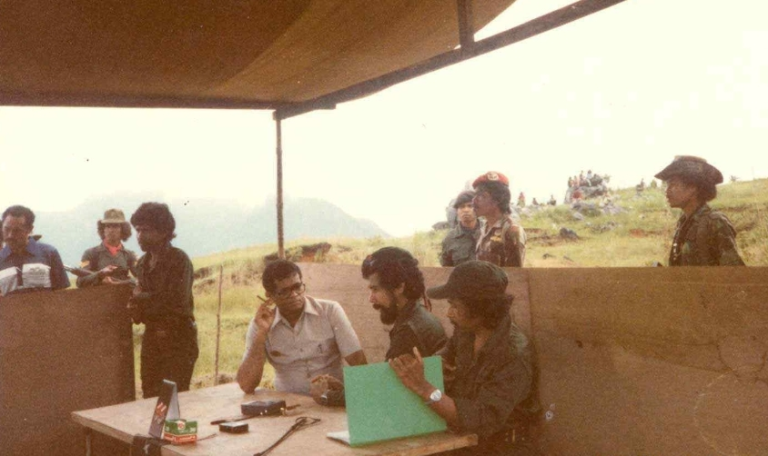
That meeting at Lariguto was attended by several figures from both sides — a rare moment when Falintil and Indonesia sat face to face not as enemies exchanging fire, but as parties exploring the path to peace.
Even an internal coup attempt led by senior Falintil officers themselves in 1984 failed to unseat him. If anything, he grew more politically mature: in 1987 he left Fretilin to found a cross-faction resistance body called the CNRM — so the independence struggle would no longer be tied to a single faction — which in 1998 transformed into the CNRT, the forerunner of the party he still leads today.
Xanana, the journalist and poet, was not yet widely known until the Santa Cruz tragedy erupted in November 1991. From that bloody event onward, his name became a rallying cry at every demonstration, making him public enemy number one for the ruling government at the time.
The hunt for him grew ever more intense. In November 1990, twelve battalions and four Indonesian military helicopters surrounded the Same and Ainaro region in an operation codenamed "Senyum" (Smile) to capture him — but Xanana is believed to have slipped away just the night before the raid. His skill at evading such a massive siege left such an impression on the Timorese people that folk stories arose describing his cunning in symbolic terms: he was said to be able to "transform" into a white dog roaming freely without arousing the soldiers' suspicion. This was, of course, not a literal historical event, but a reflection of how deeply the people admired his cleverness and courage in evading capture — a form of homage through folklore, not a literal historical record. Similar manhunts recurred across various regions, including Aileu, before a full-scale siege campaign finally succeeded in capturing him.
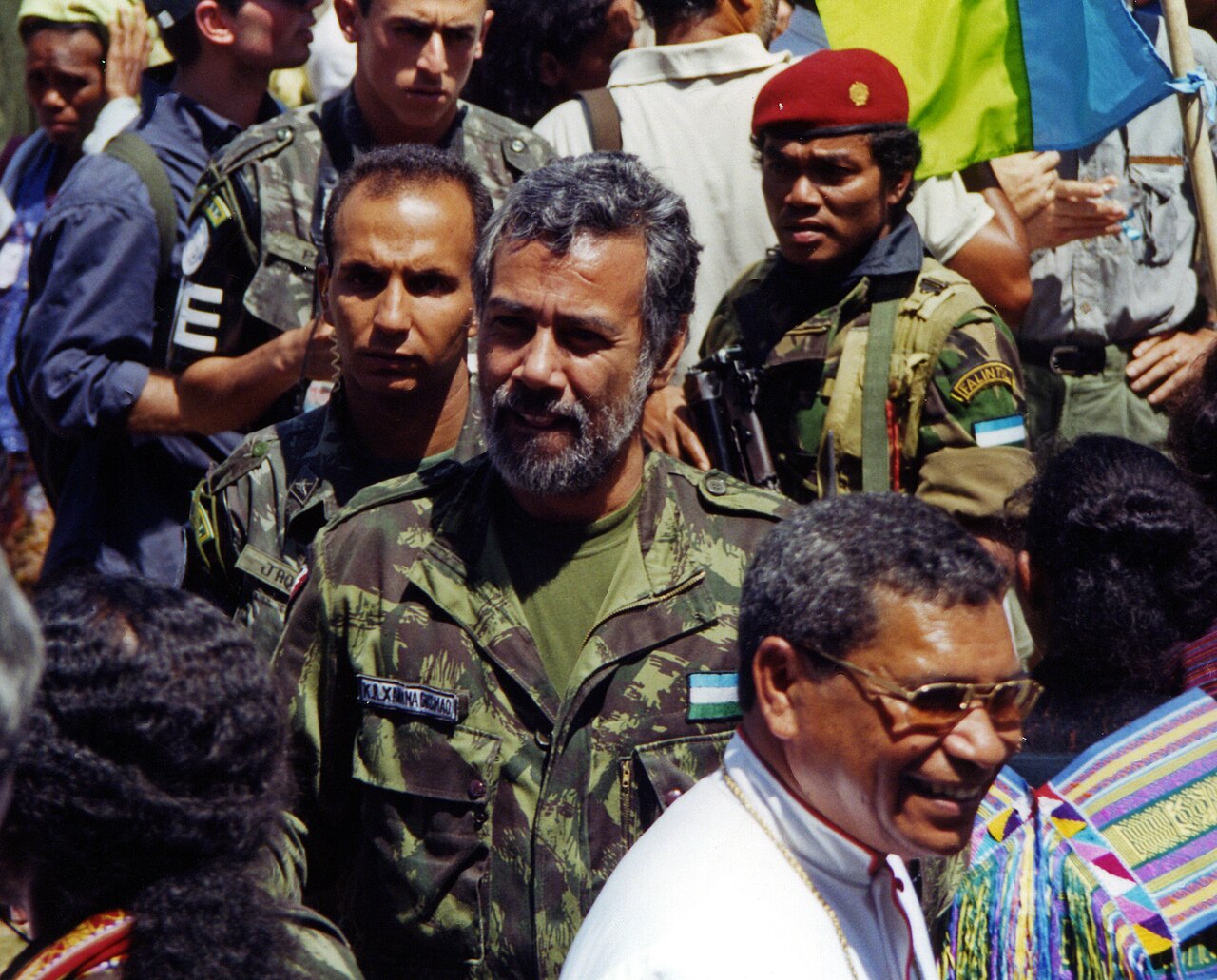
On 20 November 1992, the massive siege campaign finally bore fruit. He was found hiding in an underground tunnel at the Araújo family home in the Lahane area near Dili, then taken to Bali before being tried in Jakarta. He was found guilty of rebellion and attempting to separate the territory, defended himself at trial, and was sentenced to life imprisonment in May 1993 — a sentence later commuted to 20 years by President Suharto three months afterward. He was then transferred to the maximum-security Cipinang prison in Jakarta.
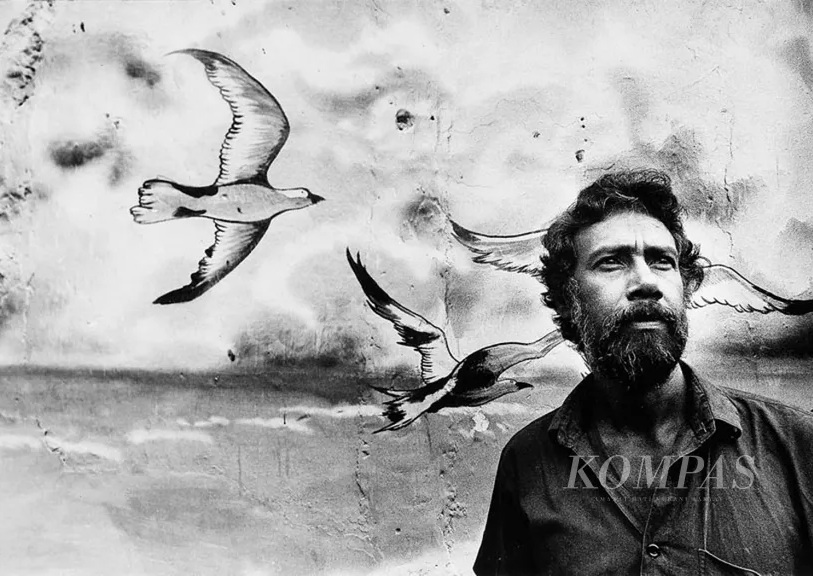
"Patria ou morte — homeland or death."
But prison never truly contained him. From behind the bars of Cipinang, with the quiet help of Kirsty Sword, he still managed to guide the resistance from within his cell. Britain even offered him political asylum to guarantee his safety — a special room at the British Embassy in Jakarta is still named the "Xanana Room" in memory of that offer. He regularly received visits from UN representatives, even from a figure as prominent as Nelson Mandela — proof that only his body was imprisoned, never his ideas.
One of the most meaningful visits came from Abdurrahman Wahid, chairman of Indonesia's largest Muslim organization, who would later become President. In that meeting at Cipinang, Wahid expressed the view that the people of East Timor had the right to determine their own political future — though he admitted he did not personally fully support the independence option. As a symbol of friendship, Wahid gifted him a traditional batik shirt, and Xanana reciprocated with a traditional Timorese woven scarf. In that same meeting, Xanana relayed an important message: that pro-Indonesia paramilitary militias be disarmed to prevent further bloodshed.
Footage of Abdurrahman Wahid's visit to Cipinang prison to meet Xanana Gusmão, discussing the political future of East Timor amid the momentum building toward the referendum.
Despite the injustice he faced, Xanana never harbored resentment toward Indonesia. His struggle, whether through arms or diplomacy, was solely to give the people of East Timor the right to determine their own fate — he even said he would have accepted it gracefully had the integration option won the referendum. He firmly rejected the autonomy option offered as a middle ground, including when church figures tried to persuade him, because in his view, autonomy would bring no real benefit to the people of East Timor.
He was released on 30 August 1999, coinciding exactly with the fall of the old regime and the beginning of Indonesia's Reform era — and on the very same day the referendum results were announced: more than seventy-eight percent of East Timor's people had voted for independence.
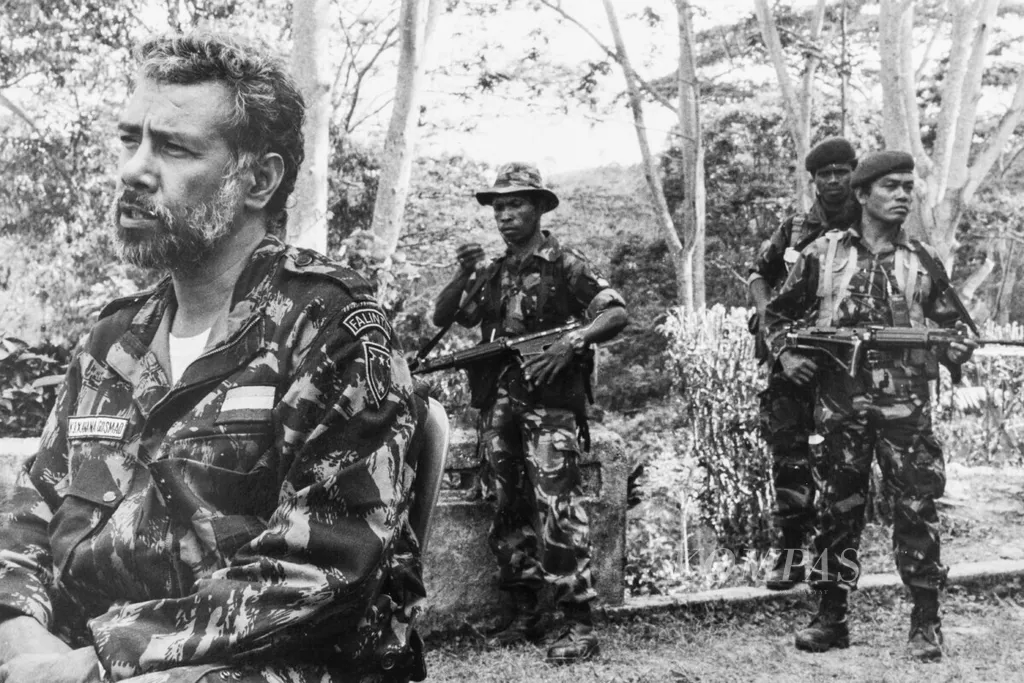
A Quiet Homecoming, a Speech That Shook Dili
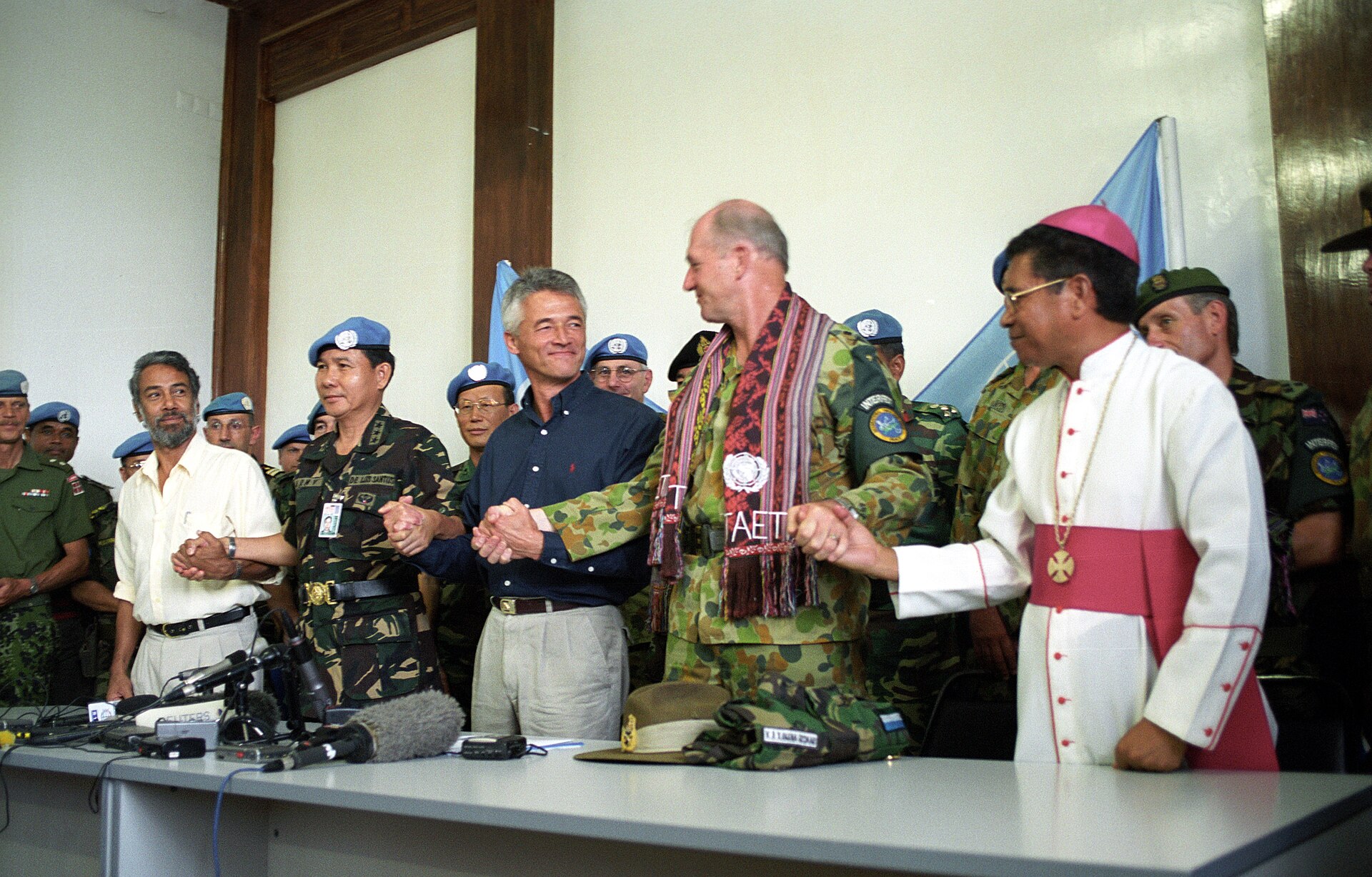
The 30 August 1999 referendum was a major victory, but it also triggered a horrifying wave of retaliatory violence from pro-integration militias. International diplomatic pressure peaked, prompting the Australian-led international peacekeeping force, INTERFET, to enter East Timor to restore security.
Amid that tense situation, on 21 October 1999, Xanana was quietly flown from Darwin to Baucau before continuing on to Dili. His presence was only announced through loudspeaker trucks in the streets of the city. In the 25-minute speech he delivered that day, he did not call for revenge, but for reconciliation and rebuilding — an attitude that had been the hallmark of his leadership from the very beginning.
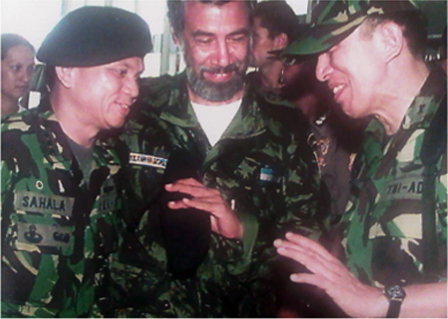
He was then entrusted to lead the National Consultative Council, a kind of transitional parliament under the UN's interim administration, while also being seen as the de facto leader of the newly born nation. The high point came on 14 April 2002: Xanana won Timor-Leste's first presidential election in a landslide, with 82.7 percent of the vote — cementing his position as the country's first head of state when full independence was finally proclaimed on 20 May 2002.
From Prison Cell to Presidential Palace
When East Timor finally achieved full independence in 2002 after a referendum steeped in blood and tears in 1999, the world witnessed something rarely seen in history: a former political prisoner, a onetime forest fugitive, standing as the first president of the newly, fully independent Democratic Republic of Timor-Leste — even though he had actually once said he did not want to hold the presidency. Xanana Gusmão served as head of state from 2002 to 2007.
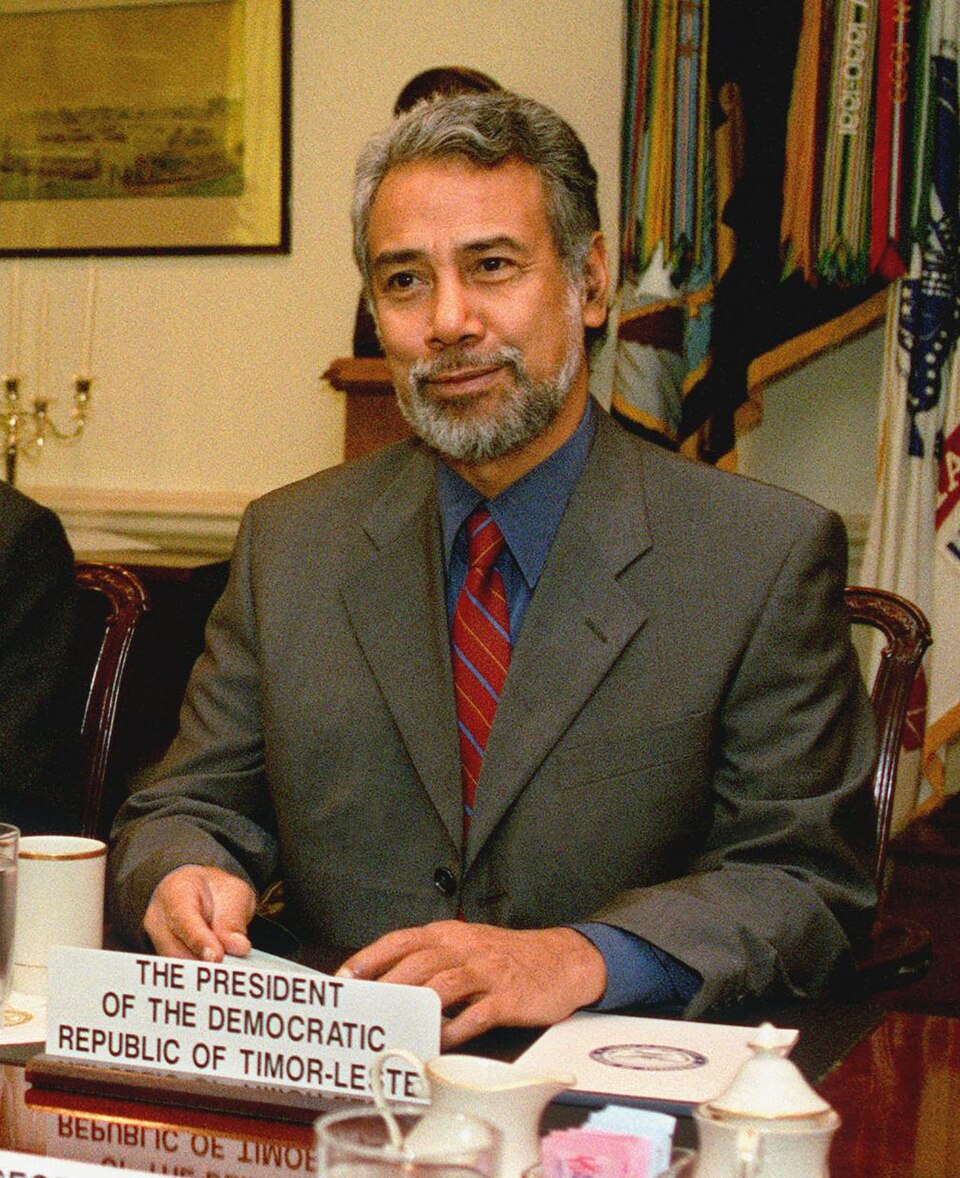
But his journey did not stop there. He later became Prime Minister of Timor-Leste, leading the government from 2007 to 2015 — the longest tenure in the history of that office, lasting seven years and one hundred ninety-two days.
The road to the Prime Minister's office was not a smooth one. In June 2006, as President, he pressed then-Prime Minister Mari Alkatiri to resign amid serious allegations that sparked massive protests — a political crisis that ultimately led to Alkatiri's resignation and opened the way for Xanana to return to lead the government in August 2007, this time through his own party, CNRT.
His leadership was not free from mortal danger. On 11 February 2008, his motorcade was fired upon just an hour after President José Ramos-Horta was shot in the abdomen in an incident many considered an attempted coup. He survived, and continued to lead until the 2012 election returned him to office as both Prime Minister and Minister of Defense.
In early 2015, in a move rarely made by any leader, he chose to step down voluntarily ahead of schedule, handing the reins of leadership to Rui Maria de Araújo for the sake of the nation's leadership regeneration. Yet his departure never truly took him off the stage. After CNRT lost the 2017 election, he was entrusted as Timor-Leste's chief negotiator in the maritime border dispute with Australia — a difficult negotiation that finally bore fruit in March 2018 with the new Timor Sea Boundary Treaty. He returned to Dili to a hero's welcome from thousands of citizens.
He carried that momentum straight into the political arena. In the 2018 election, Xanana personally took to the field representing CNRT in a three-party coalition called the Alliance for Change and Progress (AMP), traveling from village to village to convince the people that his long struggle was not yet over.
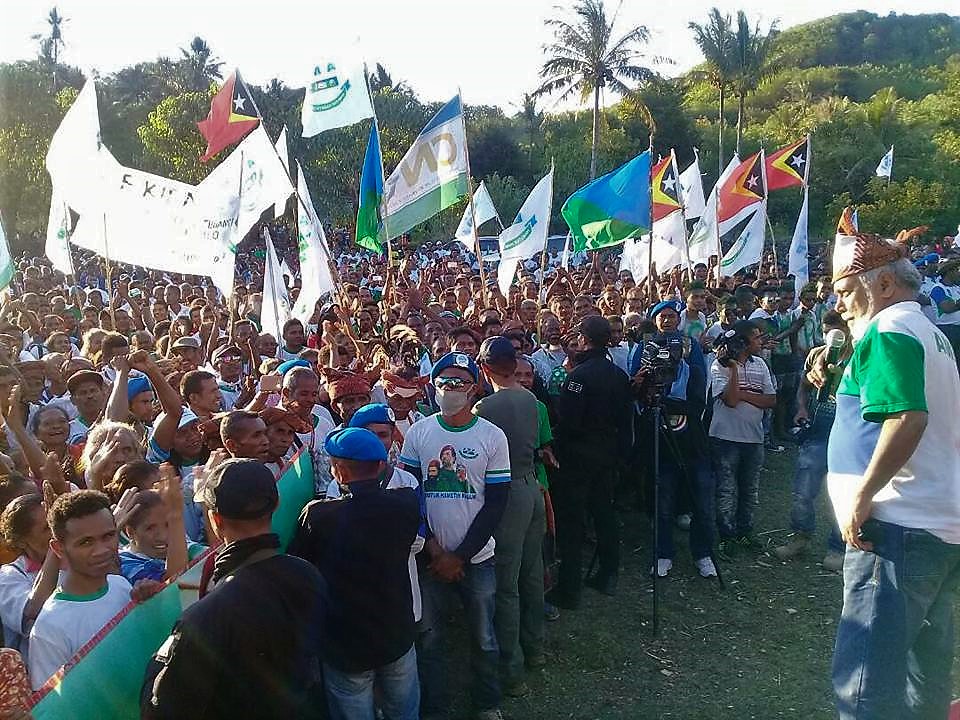
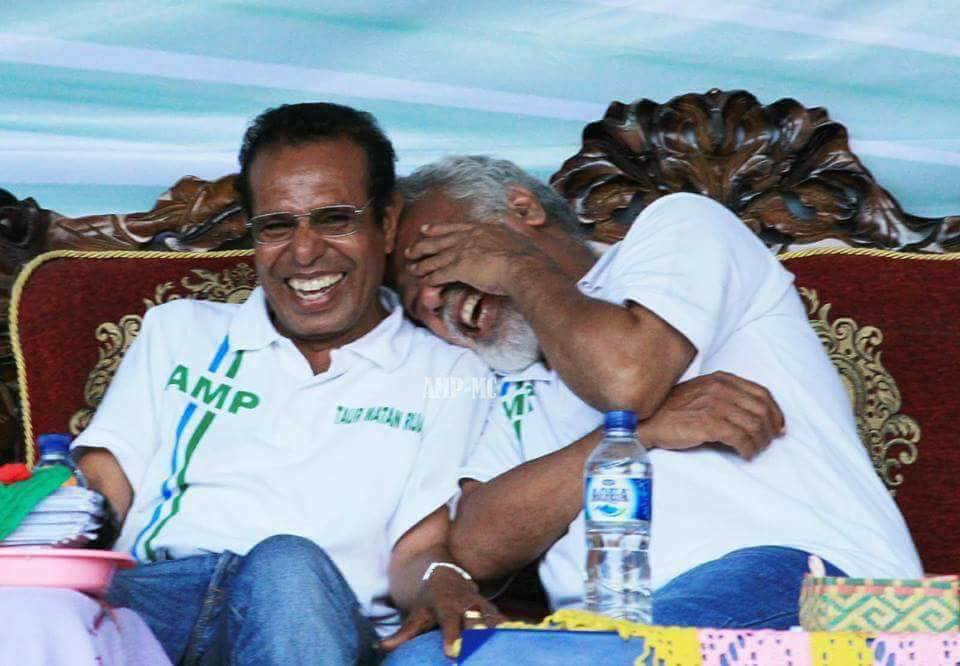
That hard work paid off. The AMP coalition he championed, together with Taur Matan Ruak, then serving as President, secured a convincing victory in the 2018 election — a political reconciliation between two figures who had once been at odds, now united for the sake of government stability.
Diplomacy Without Grudges: "A Free Timor-Leste, a Free Indonesia"
What made Xanana's struggle so different from other stories of revolution was his remarkably graceful communication strategy, entirely free of hostility. To Indonesia, the UN, and the international community, his message was simple yet sharp: if Timor-Leste became independent, Indonesia too would be freed from the diplomatic burden that had long weighed on its relations with the world — and could refocus fully on far more urgent domestic priorities in the post-Reform era.
During his presidency, he put that attitude into practice through genuine cooperation rather than suspicion. Border security issues and the plight of refugees in West Timor, which had lingered as a sore point after the referendum, were approached through direct dialogue between heads of state — not through escalation or one-sided accusations.
Presidents of ETimor, Indonesia hold talks on security situation — footage of a meeting between the President of Timor-Leste and the President of Indonesia discussing the post-independence security situation.
Since independence, he has proven that promise himself. Xanana and Timor-Leste have grown into close friends of Indonesia, not enemies harboring old grudges. When the tsunami struck Aceh, he traveled to Indonesia in person to meet with the President and deliver aid from the people of Timor-Leste for the victims — a gesture that closed the wounds of history with head held high, not with anger. That friendship has continued to grow in the years since, extending well beyond his time as head of state.
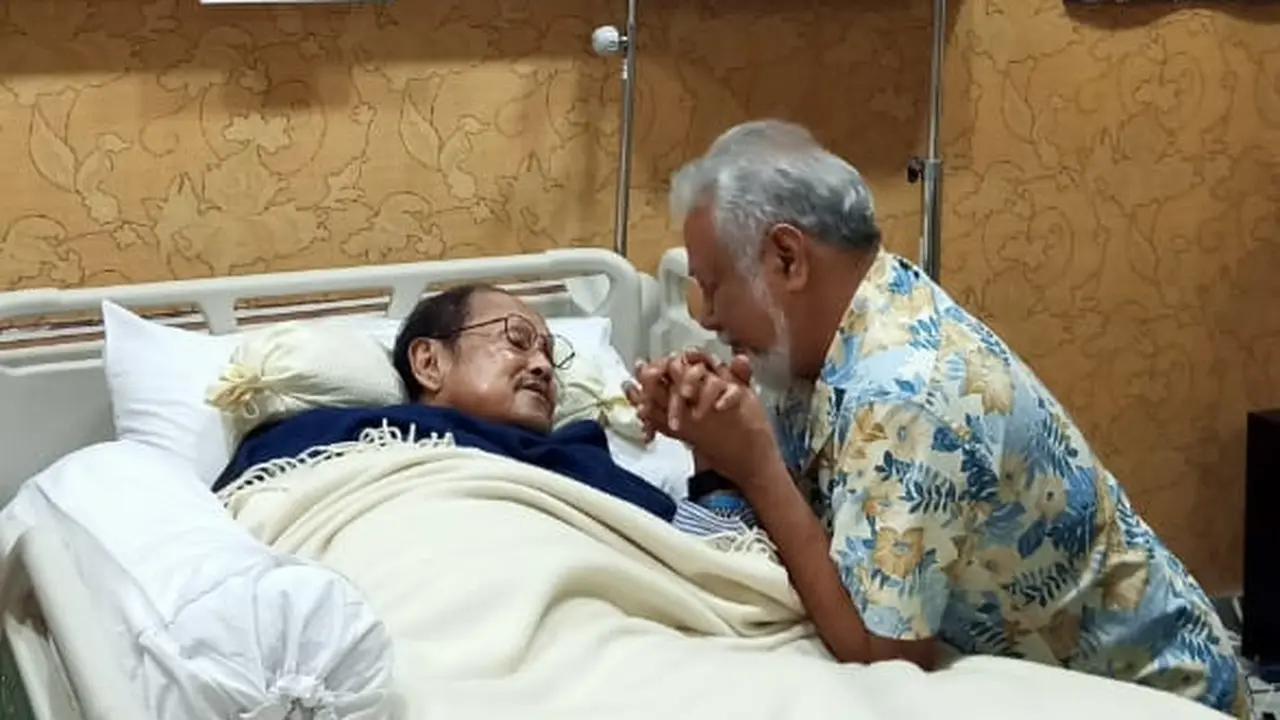
Supermentor: The Life Journey of Xanana Gusmão — the story of his role as a cornerstone of reconciliation between Indonesia and Timor-Leste after the popular consultation.
Back on the Stage: A New Chapter in His Golden Years
On 1 July 2023, Xanana Gusmão was once again sworn in as Prime Minister of Timor-Leste — the second chapter of his leadership in that office, this time with his party, CNRT (National Congress for Timorese Reconstruction), leading the governing coalition. At an age well past seventy, when most people would choose to rest, Xanana instead once again took up the responsibility of leading the nation he had helped bring into being.
And another major achievement came during this second era of his leadership. Timor-Leste officially became ASEAN's 11th member state in October 2025, closing a two-decade diplomatic chapter that began back in 2011. This was no mere administrative milestone — it was the world's acknowledgment that a small nation, once struggling alone amid ruins, now stood as an equal among its neighbors in the region. The moment meant so much to him that, at the 47th ASEAN Summit in Kuala Lumpur, Xanana could not hold back tears of joy when Timor-Leste's full membership status was officially announced.
Xanana Gusmão overcome with emotion after Timor-Leste officially became an ASEAN member state at the 47th ASEAN Summit in Kuala Lumpur, Malaysia.
Gusmão attended the 2026 ASEAN Summit alongside nearly all the leaders of fellow member states, a sight that was perhaps deeply moving for anyone familiar with this nation's long journey — from colonial rule, to occupation, to a hard-won, bloody independence, and finally to a seat at the regional diplomatic table as an equal partner.
He has also been actively engaged in intensive bilateral diplomacy. In July 2026, he received the first-ever state visit by a Singaporean Prime Minister to Timor-Leste, a visit that coincided with the first anniversary of Timor-Leste's full ASEAN membership. Moments like these stand as proof that the man who once hid in the jungle has now become a bridge connecting his country to the world.
A Voice From Within: The ASEAN Vision and an "No Enemies" Policy
In a special interview with the Indonesian daily Kompas in early May 2026, during a visit to Indonesia, Brunei Darussalam, Singapore, and the Philippines, Xanana revealed a small piece of the story behind Timor-Leste's ASEAN membership. Twelve years earlier, he said, he had raised the idea with President Susilo Bambang Yudhoyono, who welcomed it with an open mind — support that would later come directly from Indonesia during a state visit to Dili.
Yet Xanana did not present himself as a leader boasting over the achievement. He instead stressed that Timor-Leste, as a very young nation, must first complete the consolidation of its state institutions before daring to speak of grand long-term visions. For him, ASEAN is a space for learning — a place to absorb best practices from neighboring countries and adapt them to Timor-Leste's own conditions, including challenges around human resources and the struggle over language identity: Portuguese as the official language, which had been eroded somewhat after twenty-four years under Indonesian influence.
On the direction of the economy, he has chosen a realistic, unhurried path. Rather than leaping straight into industrialization, his government has first focused on boosting agriculture and micro, small, and medium enterprises, complete with bank credit schemes to encourage domestic production. The goal is simple but fundamental: to reduce dependence on imports that drain millions of dollars every year, at a time when part of the population still lives in real hardship.
Asked about ASEAN's relevance amid various regional challenges, Xanana refused to view it narrowly. He pointed out that other regions of the world, from Europe to Africa, face similar challenges — and that ASEAN's non-intervention principle, while limiting the organization's ability to dictate to its members, can still be effective through patient dialogue and social-diplomatic approaches, as shown by his own experience handling tensions with Myanmar and through the G7-plus forum.
But his most notable statement came when asked about balancing Timor-Leste's relations with Australia, China, and Indonesia. His answer amounted to something of a foreign policy manifesto: no country is considered bigger, richer, or more important than another, and none would be labeled an enemy. He has chosen to have neither allies nor adversaries, because for him, all nations of the world — near or far, large or small, rich or poor — are, at their core, brothers.
"No allies, no enemies — we are all brothers."
Xanana Gusmão: "Timor-Leste, With No Allies, No Enemies" — a special interview with Prime Minister Xanana Gusmão for the Kompas daily.
The Man Behind the Legend
Behind the statesman's mantle, Xanana has always remained an ordinary man with a life story full of twists and turns. At 19 he met Emília Baptista, whom he later married while serving in the colonial army, and together they had two children, Eugénio and Zenilda. That marriage later ended in divorce, over the course of the long years he spent on the run and in prison.
In 2000, not long after his release, he married for the second time, to Kirsty Sword, an Australian activist he met through the international solidarity movement for Timor-Leste's independence — she had even helped keep his communication channels open during his time in Cipinang. From this marriage came three sons: Alexandre, Kay Olok, and Daniel, completing the five children he now has.
His love story with Kirsty Sword is itself part of the legend: a foreign activist who fell in love not only with the cause, but with the leader behind it, even amid the most perilous of circumstances.
Awards and Honors From Around the World
Xanana's long struggle has been recognized not only at home, but also by the international community, through a series of awards and the highest honors from various nations — recognition of his steadfast fight for freedom of thought, human rights, and peace.
- Sakharov Prize for Freedom of Thought from the European Parliament (1999)
- Sydney Peace Prize, for his courage in leading the struggle for East Timor's independence (2000)
- Gwangju Prize for Human Rights, the inaugural award for his contribution to human rights and democracy (2000)
- North-South Prize from the Council of Europe (2002)
- Distinguished Member of the Sérgio Vieira de Mello Foundation
- Collar of the Order of the Southern Cross (2012)
- Grand Cross of the Order of Ipiranga, from the State of São Paulo (2011)
- Honorary Knight Grand Cross, Order of Saint Michael and Saint George (2003)
- Bintang Republik Indonesia Adipurna (2014)
- Grand Collar of the Order of Prince Henry (2006)
- Grand Cross of the Order of Liberty (1993)
- Honorary Companion of the New Zealand Order of Merit (2000)
A Note From the Writer: A Smile That Became a Blessing
There's one personal memory I'd like to share here, because it feels too precious to keep to myself. The day before the 2011 CNRT Party Congress, I was given the rare opportunity to meet Xanana Gusmão in person, to demonstrate the design of the party's official website ahead of its launch. The meeting was relaxed, far from the formality one might expect with such a towering figure — full of warmth, as if chatting with a village elder rather than a former president and legendary guerrilla leader.
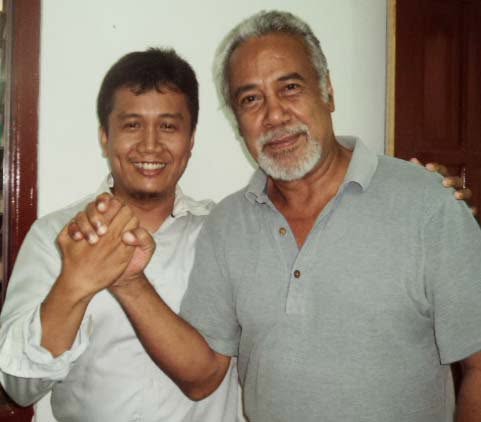
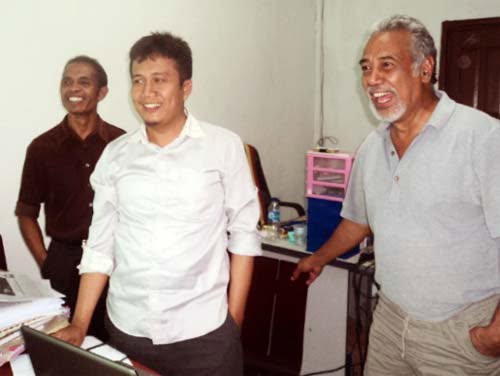
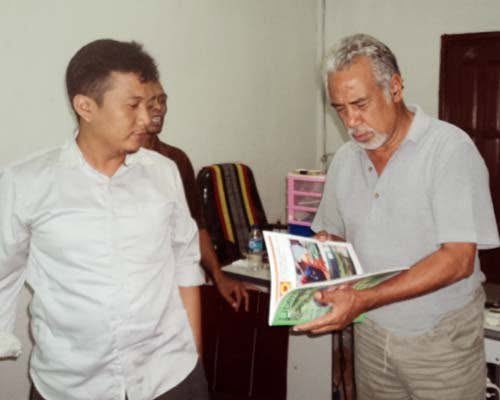
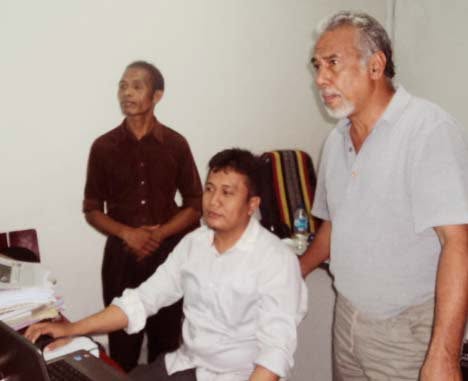
The writer had the opportunity to meet Xanana Gusmão in person the day before the 2011 CNRT Party Congress, to demonstrate the party's official website.
There was one simple "signal" we agreed on that day: if Xanana smiled while looking at the website design, it meant he approved of it going live. And that smile did come. The very next day, timed with the opening of the party congress, CNRT's official website went live to the public.
From that one simple smile came a much greater trust — I was later entrusted with managing that website for roughly eleven years, as well as handling a number of government websites and sites for other figures across Timor-Leste. A small but meaningful reminder that behind a towering figure who helped shape the history of a nation, there remains a human being who values the simple work of those around him.
A Legacy Still Being Written
Xanana Gusmão is not a perfect leader — no leader is. He has faced criticism, political challenges, and a historical burden heavy enough for anyone to carry. But one thing is hard to deny: within him lies the complete imprint of a nation's journey — from oppression to independence, from isolation to global recognition, from the guerrilla forest to the negotiating table of ASEAN.
"Independence is not a gift that is given, but something seized through unwavering resolve."
In his twilight years, Xanana Gusmão still chooses to stand at the front line, guiding his nation through a new chapter of history. And perhaps that is his true legacy: not merely the title of President or Prime Minister, but the example that love of one's homeland knows no age limit, and that true struggle is never really finished — it simply changes form, from a rifle in the forest to a pen at the negotiating table.
Editorial note: The data in this profile was compiled from up-to-date sources as of August 2026, including Encyclopaedia Britannica, Wikipedia, as well as official reports of state visits and recent regional media coverage.
Written by STY — for questions, feedback, or collaboration, reach out via WhatsApp: +62 813-1541-1874.