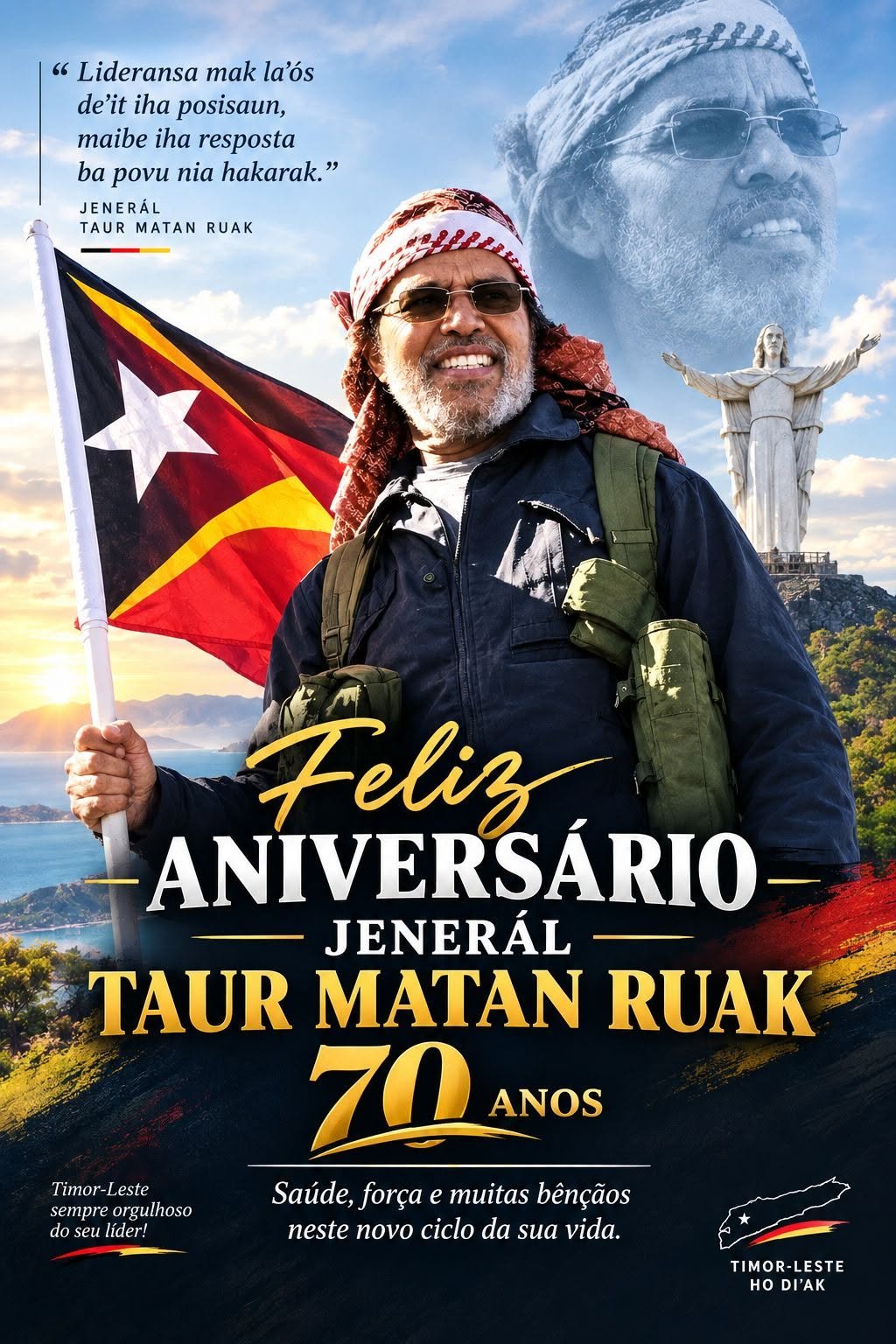
Enkontru badinas iha Dili, lialoo konaba hamta’uk iha funu, no konsellu polítiku ne’ebé muda istória.
Crónica & Memória Histórica
70 Anos de Taur Matan Ruak: Da Guerrilha ao Governo da Nação
Memórias de um encontro em Díli, a confissão sobre o medo na linha da frente e a visão de um líder que moldou o destino timorense.
Journalistic Memoir & Record
70 Years of Taur Matan Ruak: From Mountain Trails to State Leadership
A personal encounter in Dili, an honest admission of fear on the front lines, and the political advice that shaped a nation’s path.
“Kepemimpinan bukan soal jabatan, melainkan kemampuan mendengar dan menjawab panggilan rakyat.” — Taur Matan Ruak“Lideransa mak la’ós kadeira, maibé rona no hatán ba povu nia haliga.” — Taur Matan Ruak“A liderança não é um cargo, é a responsabilidade de responder ao chamado do povo.” — Taur Matan Ruak“Leadership is not a title, but the duty to answer the call of the people.” — Taur Matan Ruak
Nama José Maria Vasconcelos lekat dengan sejarah pergerakan kemerdekaan Timor-Leste. Namun, dunia lebih mengenalnya lewat nama gerilyanya: Taur Matan Ruak—yang harfiah berarti “Dua Mata yang Tajam”. Lahir di Baguia, Baucau, pada 10 Oktober 1956, ia adalah bagian dari generasi yang menyaksikan langsung bagaimana tanah airnya terkoyak perang, sebelum akhirnya memilih jalan sunyi namun berbahaya: mengangkat senjata bersama FALINTIL di pedalaman hutan.
Naran José Maria Vasconcelos moris naruk ona iha istória funu independénsia Timor-Leste nian. Maibé mundu hatene nia ho naran funu: Taur Matan Ruak. Moris iha Baguia, Baucau, iha 10 Outubru 1956, nia nu’udar jerasaun ne’ebé moris iha tempu susar no foti desizaun todan: tama ba aihan laran hamutuk ho FALINTIL hodi luta ba pátria.
O nome José Maria Vasconcelos confunde-se com a própria luta de libertação de Timor-Leste. No entanto, o mundo conheceu-o pelo seu nome de guerra: Taur Matan Ruak (“Dois Olhos Atentos”). Nascido em Baguia, Baucau, a 10 de Outubro de 1956, integrou a geração que escolheu a via da resistência armada nas montanhas com as FALINTIL.
The name José Maria Vasconcelos is woven into the fabric of East Timor’s fight for independence. To the world, however, he is known by his nom de guerre: Taur Matan Ruak (“Two Sharp Eyes”). Born in Baguia, Baucau, on October 10, 1956, he belonged to the generation that chose armed resistance in the mountains alongside FALINTIL.
Dua Puluh Empat Tahun di Bawah Kanopi Hutan
Hampir seperempat abad Taur Matan Ruak hidup berpindah dari satu punggung bukit ke bukit lainnya. Tanpa pasokan logistik yang pasti, dikelilingi ancaman patroli musuh, hutan belantara adalah rumah sekaligus medan pertempurannya.
Tinan Ruanulu-resin-Haat iha Aihan Laran
Quase balun sékulu Taur Matan Ruak moris halai husi foho ida ba foho seluk. La ho ai-han seguru no moris iha perigu leet, aihan laran mak nia uma rasik.
Vinte e Quatro Anos na Sombra das Montanhas
Durante quase um quarto de século, Taur Matan Ruak viveu em constante movimento pelas serras. Sem apoios logísticos regulares e sob o cerco inimigo, a montanha foi o seu abrigo e o seu campo de batalha.
Twenty-Four Years in the Mountain Wilderness
For nearly a quarter of a century, Taur Matan Ruak lived on the move across rugged mountain terrain. Lacking reliable supplies and constantly pursued, the wilderness served as both his home and his battleground.
“Ha’u nia background ne’e militar, iha militar ne’e iha prinsipiu ida dehan hanesan ne’e: ‘Hein buat di’ak mas prepara an mós ba buat at’ ne’ebé ha’u preparadu ba kualker situasaun.”
— Komandante Jenerál Taur Matan Ruak (Latar belakang saya militer. Di militer ada prinsip: ‘Berharap yang terbaik, tetapi tetap siap menghadapi yang terburuk’.)
April 2011: Di Ruang Kerja Pak Taur
Pagi di awal April 2011 itu di Dili, Jobelo—jurnalis senior Tempo Semanal—memberi saya satu peringatan kecil sebelum kami melangkah masuk ke ruangan Pak Taur: “Bro, beliau sangat sibuk, cukup sepuluh menit saja.” Saat itu, saya mendapat mandat merancang portal website personal beliau, sebuah proyek digital yang kelak diarsipkan secara resmi oleh Library of Congress America di Washington D.C.
Karena sebagian besar hidupnya dihabiskan di hutan, beliau terbiasa menggunakan bahasa Inggris alih-alih bahasa Indonesia. Perbincangan kami pun mengalir cair. Di sela-sela obrolan tersebut, saya melempar satu pertanyaan:
Abrile 2011: Iha Gabinete Komandante nian
Loron ida iha inísiu Abrile 2011 iha Dili, Jobelo husi Tempo Semanal hateten ba ha’u molok tama ba gabinete: “Maun, Komandante okupadu tebes, minutu 10 de’it.” Tempu ne’ba, ha’u hetan fiar atu dezenvolve website pesoál ba nia—projetu ida ne’ebé ikus mai rai iha arkivu mundiál Library of Congress America iha Washington D.C.
Tanba moris naruk iha aihan laran, nia la uza lia-Indonesia maibé ko’alia Inglés ho laran-suar. Iha momentu ne’e, ha’u husu pergunta ida:
Abril de 2011: O Encontro em Díli
Numa manhã de Abril de 2011 em Díli, Jobelo, jornalista do Tempo Semanal, alertou-me à porta do gabinete: “O General está muito ocupado, tenhamos apenas dez minutos.” Nessa altura, cabia-me desenhar o website pessoal do General, um projeto digital que viria a ser integrado no arquivo da Library of Congress dos EUA.
Tendo passado décadas nas montanhas, o General comunicava com facilidade em inglês. A conversa fluiu de imediato, levando-me a fazer uma pergunta:
April 2011: Inside the General’s Office
One morning in early April 2011 in Dili, Jobelo, a senior journalist with Tempo Semanal, gave me a polite heads-up outside Taur Matan Ruak’s office: “His schedule is tight, let’s keep it to ten minutes.” I was tasked with designing his personal website—a digital footprint that would later be archived by the U.S. Library of Congress in Washington D.C.
Having spent decades in the field, the General was completely at ease conversing in English. As our dialogue unfolded, I asked a question:
“Pak Taur, selama 24 tahun memimpin perjuangan di garis depan pertempuran, apa yang sebenarnya Bapak rasakan ketika peluru mulai berdesing di sekitar Bapak?”
Beliau tersenyum kecil: “Namanya juga manusia biasa. Tentu saya merasa takut, sama seperti orang lain. Tapi, kalau tujuan perjuangan sudah bulat dalam pikiran kita, keberanian itu akan datang dengan sendirinya…”
Resposta: “Nudar ema baibain, ha’u mós sente hamta’uk, hanesan ema seluk. Maibé wainhira objetivu luta nian klaru, aten-brani mosu ho rasik…”
“Senhor General, ao longo de 24 anos na linha da frente, o que sentia intimamente quando os combates irrompiam?”
Resposta: “Como qualquer ser humano, também sentia medo. Contudo, quando a causa é clara e justa, a coragem surge naturalmente…”
“General Taur, during twenty-four years on the front lines, what did you truly feel when firefights broke out?”
Response: “As a human being, I felt fear like anyone else. But when your cause is clear, courage naturally prevailed…”
Waktu 10 menit dari Jobelo berlalu begitu saja. Kami berbicara hampir satu jam. Di ujung pertemuan, Pak Taur menitipkan sebuah wejangan:
“Jika Anda merasa orang baik, jangan ragu untuk masuk ke panggung politik. Sebab jika orang-orang baik memilih menjauh, arena itu akan diisi oleh orang yang keliru, dan rakyatlah yang akan menanggung bebannya…”
Tempu minutu 10 ne’ebé Jobelo fó liu mohu tiha. Molok hakotu, nia husik hela lia-fuan ida:
“Se Ita sente Ita ema di’ak, keta ta’uk tama ba polítika. Se ema di’ak sira dook, fatin ne’e sei prense husi ema sala, no povu mak sei sofre…”
Os dez minutos previstos transformaram-se numa hora. No fim, o General deixou um conselho:
“Se se considera uma pessoa íntegra, não recue perante a vida pública. Se os cidadãos íntegros se afastarem, a política será gerida por quem não deve…”
Jobelo’s ten-minute limit evaporated into an hour. As we parted, the General shared a piece of advice:
“If you consider yourself a person of principle, do not shy away from public service. If good people step back, the political arena will be filled by the wrong hands…”
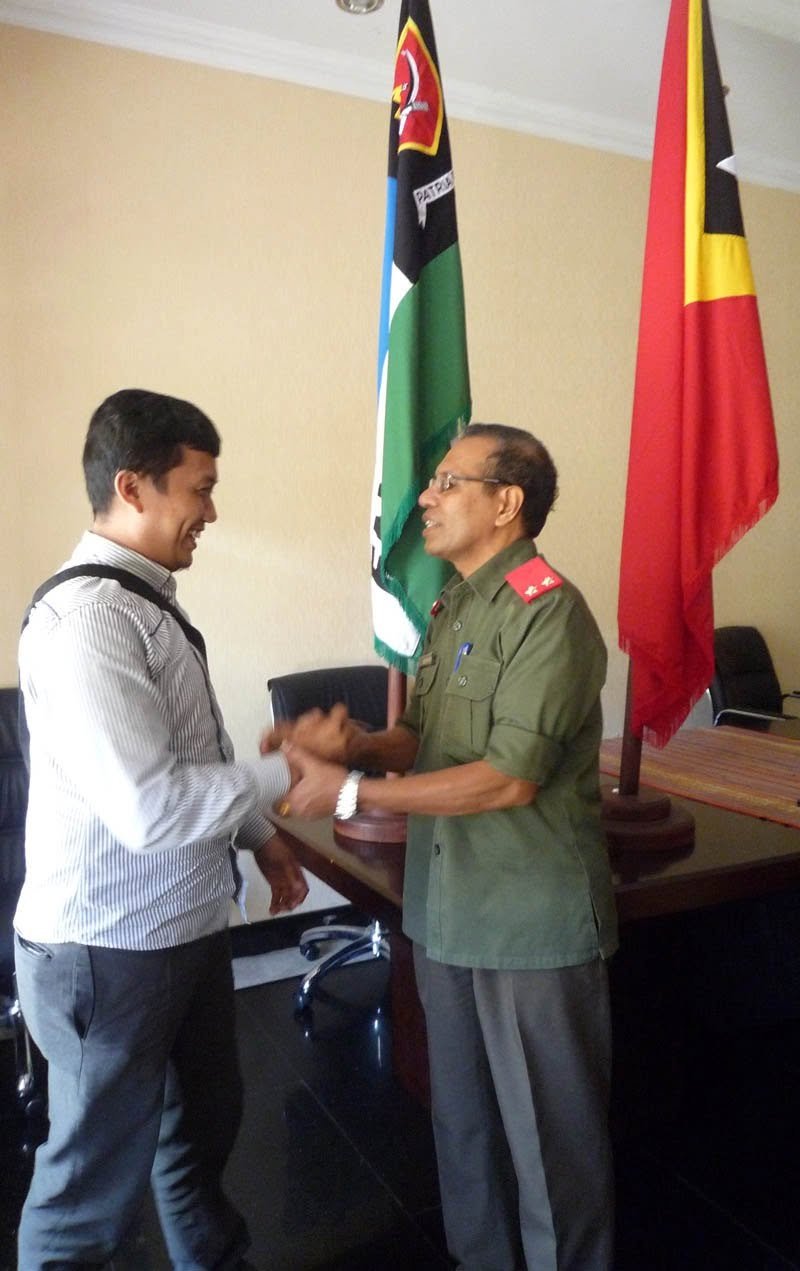
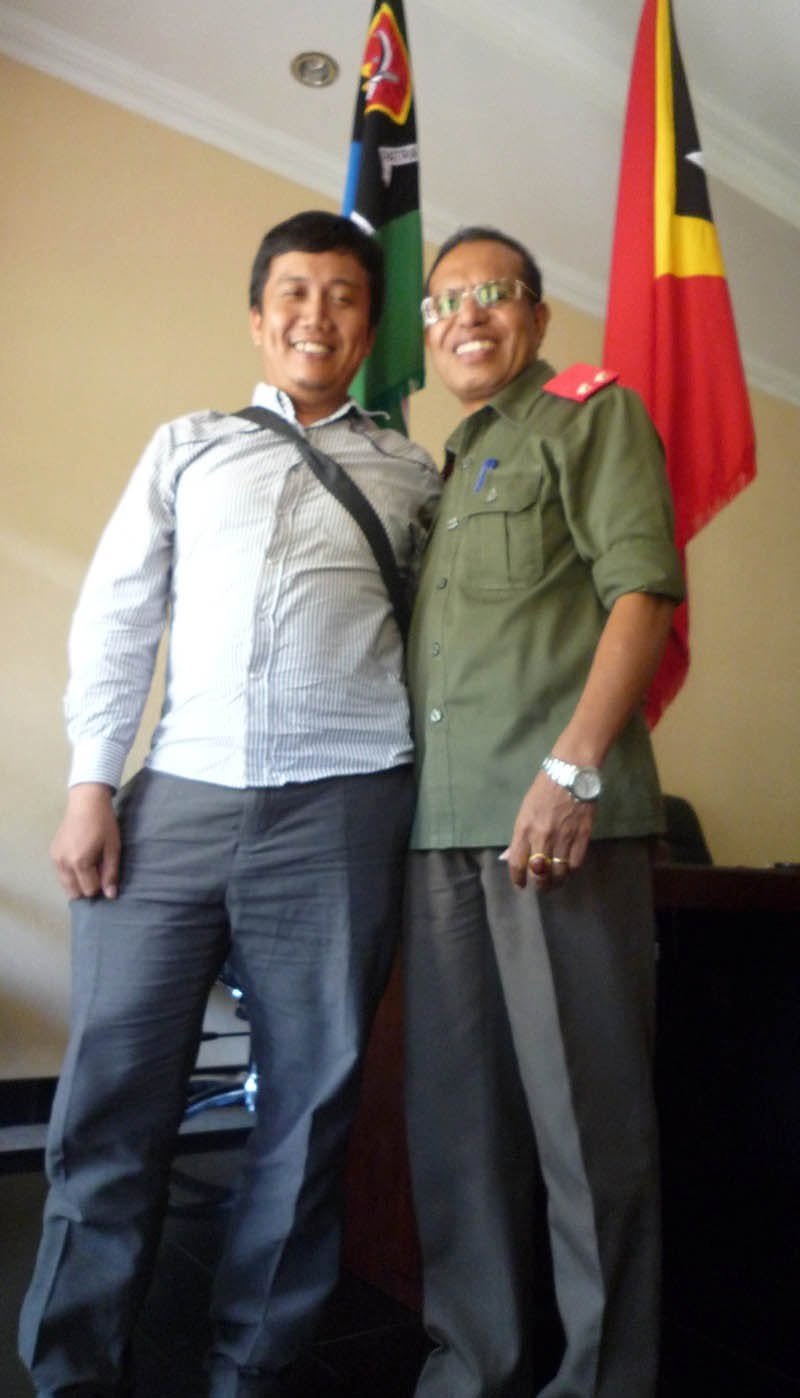
Dokumentasi Perjumpaan (Dili, 2011)
Dari Nasihat ke Kursi Kepemimpinan
Wejangan agar orang baik tidak menjauh dari politik itu menemukan buktinya sendiri. Tepat setahun setelah perjumpaan tersebut, Taur Matan Ruak maju ke gelanggang sipil dan terpilih sebagai Presiden Republik Demokratik Timor-Leste, dilantik pada 20 Mei 2012. Pengabdiannya berlanjut ketika ia memegang tampuk kepemimpinan sebagai Perdana Menteri pada periode 2018–2023.
Husi Konsellu ba Lideransa Nasional
Lia-fuan konsellu ne’e sai realidade. Tinan ida liu ba, Taur Matan Ruak sai kandidatu no povu hili nia sai Prezidente Repúblika Demokrátika Timor-Leste, simu posse iha 20 Maio 2012. Nia mós servisu nu’udar Primeiru-Ministru iha periodu 2018–2023.
Da Palavra à Ação Política
A exortação sobre a participação cívica concretizou-se. Um ano após aquele encontro, Taur Matan Ruak avançou para a política institucional, sendo eleito Presidente da República a 16 de Abril de 2012 e empossado a 20 de Maio. Mais tarde, exerceu funções como Primeiro-Ministro entre 2018 e 2023.
From Counsel to State Leadership
His advice on civic engagement proved prophetic. Exactly a year later, Taur Matan Ruak entered electoral politics, winning election as President of East Timor and taking office on May 20, 2012. He later served the nation as Prime Minister from 2018 to 2023.